




|
|
|
|
Vehicles of the Bygone were (and still are) a wonder to behold. Their exotic materials, unnatural shapes, and smooth colours set them apart from the patchwork recreations or imitations in the modern era, and while some are still found in near-mint condition thanks to sealed vaults of Quiet Air or the Decider’s own phenomenal restoration, most are presented here for a historical record of what once was. Many are considered relics and are thus off-limits to anyone who isn’t in good standing with (or a member of) the Arcanar Guild, the Tradewind Guild, or the Decider’s own personal retinue. Most of them run on Radiant energy, which is to say the light of the sun, the gift of Kij in the time before the Automatic War. The mineral she composed for the Creator State was meant as a peace offering, but was subverted and converted to war-power by Aethos. This awful betrayal may explain why she rejected him and his offer to join his reign as the new supreme divine couple, supplanting Ceropa and Halut. Materials such as luxic and luxite were woven into the powerplants of even the most humble device, granting them a natural recharging capacity for as long as the sun shone. .
Restored: Only the Arcanar Guild trains its members in the ancient arts of technology, allowing them to repair and even restore these vehicles to somewhere near their original condition and quality. Unfortunately, only the Decider herself has the knowledge and skill to have truly mastered this process. Arcanar restorations are always somewhat obvious, either because they can’t resist embellishing their work with luxury adornments or their own personal touches, or because the item fails certain tests or trials, or has a certain chance of malfunctioning during operation. In such cases, the vehicle may break down, lose some vital function, or even explode. Mint Condition: Some vehicles may be found in their original condition, stored in secret caches, bunkers, hangars, malls, or other places sealed by the inert preservative gas called Quiet Air. Though deadly to living things, it’s a perfect atmosphere for preventing oxidation, which was the death of most such items over the centuries. Combined with a special coating or other substances, these preservation measures saved a significant number of vehicles over the centuries, and the bounty on such vehicles is breathtaking. The scavengers of the Axis wasteland are looking for such items first and foremost, and consider them to be the ultimate prize. They function as they did when first made.
|
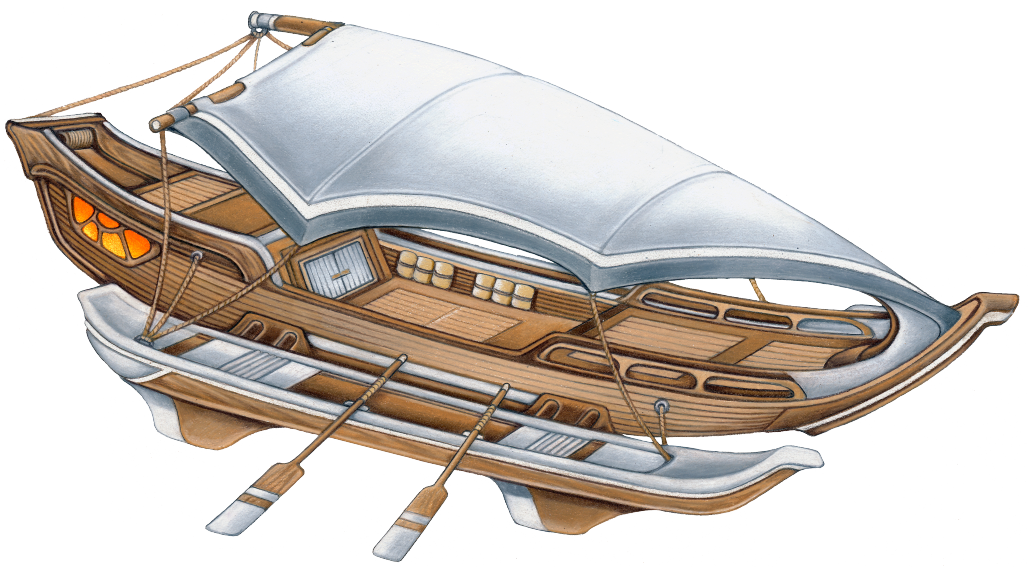
REEFSKIMMER VEHICLE RANGE: Varies SPEED: 15-25 knots CARGO: 1500-2500 lbs. CREW: 3-5 The lutrai have retained a considerable talent for boat-building in the years since the Automatic War. This may have something to do with their naval assignment or more likely just their regular proximity to large bodies of water, but whatever the case may be, their culture produces a lot of adept shipwrights. Most of their ships are built by groups of enthusiasts or else families who commission skilled crafters and then contribute their own required elements under guidance - very seldom is this a solitary undertaking, and it's generally considered back luck to build a boat all by oneself. The reefskimmer is a cross between a catboat and catamaran, an unusual design which is common in the southern archipelago of Cekus. Built for shallow coastal waters, the reefskimmer is easily distinguished by its forward-mounted sail, flexible mast, and detachable pontoon outriggers. These can be separated from the main hull and converted to canoes or kayaks, depending on their size, and otherwise serve to stabilize the ship or add additional seating for rowing maneuvers. Most skimmers have a two roomy compartments, one in the bow for cargo and one aft for living and sleeping quarters. Larger specimens such as this also have a cargo hold amidships, though this is often reserved for emergency provisions, repair material, and floatation devices. Most reefskimmers are built for leisure, fitted and stocked accordingly. Details: There are two cargo compartments in the forward hold, separated by a bulkhead and accessed from the top. These each hold around a thousand pounds of cargo, though some are converted to living spaces or even kennels for pets. Such compartments are thoroughly waterproofed, often through wood-shaping or rubber seals, most often reserved for provisions or items for trade. The mid-hold contains heavier supplies for boat maintenance – tools, sailcloth, pitch, varnish, rope, and so forth. These are necessary for larger vessels and longer journeys, and may be substituted for additional cargo storage space on shorter trips. In some cases this hold may even be concealed and only accessible from the main forward cargo hold. The aft section contains the living quarters. This may be a pair of cabins or one single large sprawl space filled with comfortable bedding and a large window of heavy glass for natural lighting. Some even contain a small galley kitchen, a compact greenhouse, nursery, or crafting space.
Mechanics: The reefskimmer is an extremely fast catboat with a fold-down mast, a design which works best in warm coastal waters with strong and predictable wind patterns. It can serve as a party’s transportation but also as a comfortable living space when properly maintained and outfitted. The ship wasn’t made for combat engagements, though it can easily outrun and outmaneuver almost anything that was. Its two outrigger canoes also serve as lifeboats should the need arise. They also act as collision buffers in some instances.
|
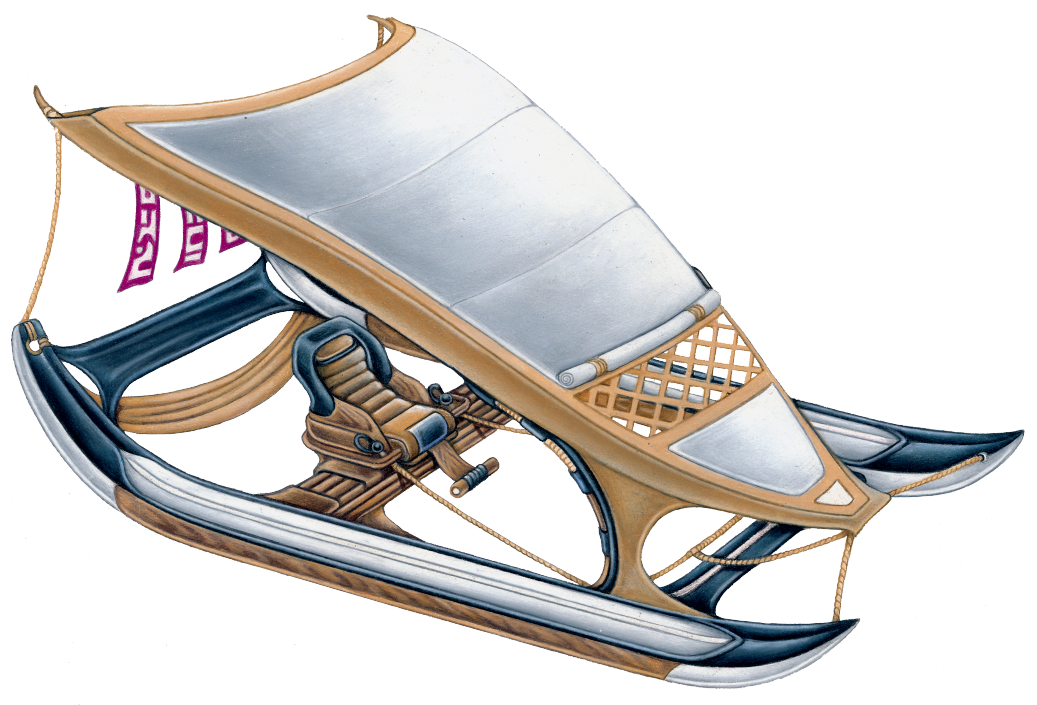
WINDFOIL VEHICLE RANGE: Varies SPEED: 15-45 knots CARGO: 50-150 lbs. CREW: 1 The Mariner tribes of the southern archipelago love to race, and over the centuries they’ve refined a variety of lithe outrigger sailcraft for just this purpose. The windfoil is one of these, a boat stripped down to its fundamentals – sail, pontoons, and rigging harness, steered from a single seat. The vessel requires a high wind to perform, and in the right conditions it flies through coastal shallows with astonishing speed and agility. Groups of such vessels can be seen racing between islands from time to time, and the fastest of these frequently participate in annual events overseen by multiple tribes. Each chooses its champion, and the winning tribe is presented with a totem or other stylish relic to be displayed in their village. The windfoil is made from light, sturdy materials – layers of hardwood veneer laced like carbon fiber, white ash, and occasionally salvaged FGP. The windsail is expandable, stretched on rubberized cable rigging with a latticed aperture window. This allows the racer to see where they’re going, and also to moderate airflow by stretching or relaxing the lattice straps. A great deal of practice is required to master the vessel, which can easily capsize or overturn at high speed and which must be carefully balanced for the racer’s weight and maneuvering preference. These vessels are built light but do require some strategic mass to prevent them from simply being lifted off the water by powerful gusts of wind - this is usually found in the seating and the pontoons. Details: This type of vessel is fairly easy to build, materially, but the balance, weighting, aerodynamics, and rigging are difficult to fine-tune. This often takes weeks of practice runs, testing, adjustment, and alignment, much in the way a racing car must be carefully tuned before the big event. They’re built to be taken apart, too, and easily moved on larger vessels. The glide surfaces are all oiled and waxed with a special substance to eliminate friction and seal anything which might absorb water. Colourful banners are added to the rear rigging so that the craft can be easily identified, along with the racer and the community from which they hail. Some races are longer than others, and so a second racer may be necessary - in cases like this you'll see a hammock on the back of the vessel so that either of the participants can rest while the other takes over. In purely recreational excursions, this may also just serve as a bed while the vessel is moored or anchored for the night, or as a comfortable spot from which to fish.
Mechanics: This may serve as a personal exploration craft, with a small cargo space for equipment, food, etc. They're also popular with lutrai lifeguards, who use them in rescue operations. They can be assembled or dismantled in a matter of minutes, and though they're easy to damage, they're also easy to repair. Visitors to the southern islands may be able to acquire one through trading, though they're more likely to be acquired through a friendly tribe during the racing season when they're being built in larger numbers. For some, building such a vessel is another rite of passage requiring a personal investment of time and effort, and most of all one's own personal touches and flair.
|
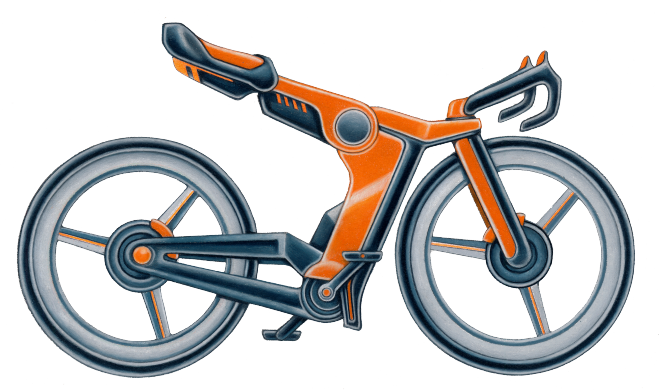
ELECTROBIKE VEHICLE The Bygone had its share of elaborate and complicated vehicles, but none was more ubiquitous than the Electrobike. Wildly popular among the youth of the Creator State, this particular variant, the Roadblaster, was made in vast quantities and can still be found today in places where there are still roads to blast. Though not particularly suited to open terrain, forests, deserts, and other rough landscape, the Roadblaster was incredibly fast on suitably flat, even surfaces such as those found in towns, cities, and well-maintained trade routes. A simple pedalling motion allowed someone of even modest fitness to traverse long distances with minimal effort, and even provided some degree of cargo capacity for small items, weapons, or sustenance. What really set it apart, however, was its power mode. For up to eight hours in one day’s charge, the Electrobike would power its own motion, allowing the rider to just relax and take in the journey. Power mode could outpace any mount and required only ambient sunlight to recharge, making it almost effortless to get from place to place. The only drawback is that if it wasn’t carefully locked or monitored, others could simply hop on and race off with it. Details: This artificial mount is quite a popular item and one of the few that can be purchased from the Arcanar Guild without a lot of hassle. They prefer to rent them, of course, but if you have the pazools, they’re not hard to acquire. They’re simple to maintain, quite durable, and can be found with regularity within the ruins of Axis, often with their skeletal riders still clinging to the handlebars. Even non-functional units allow the owner a significant improvement over the classic ‘walking’ mode of travel. They can also mean the difference between escaping a hungry predator and being eaten by one.
Mechanics: This is essentially a 1/day Mount spell, an artificial horse that moves as fast as the real thing and requires no food or water. Some models, such as the Roadblaster, can trade 1 hour of ride time for a 1 minute boost, kicking the speed from 50 to 80 and making it possible to perform considerable jumps and other stunts which require Ride checks of varying difficulty. At full speed, a Roadblaster can outrun just about anything, and jump gaps up to 20 feet across with relative ease. The Roadblaster even includes an illumination device which acts as a front-facing bullseye lantern while in power mode. It does NOT function on difficult terrain.
|
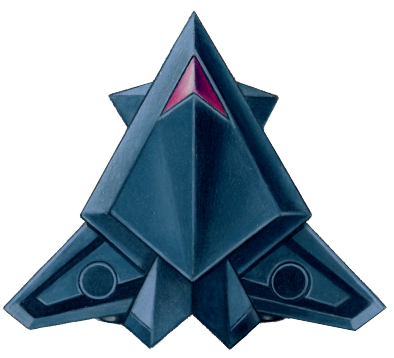
AM-14B ARROWHEAD INTERCEPTOR RANGE: 400 miles ALTITUDE: 2000-15000 ft. AIRSPEED: 1150 knots The Arrowhead used a combination of ultra-light fabrication and heavy light reaction to push the very limits of acrobatic flight. Each Onyx gunship carried two of these to act as fighter cover, flying either as wingmen or as air defense scouts. The Arrowhead uses a pair of its own light beam weapons to blind or destroy enemy fliers, and can itself become a lethal suicide projectile if necessary – a literal explosive arrowhead. This interceptor required only a single pilot and could double as an escape craft for the Dusk Heavy's intelligence officer. The Arrowhead in flight was terrifying, and made so purposefully to demoralize anyone in the path of its Dusk mothership. Fluted grooves along its body caused it to shriek in flight, a sound that came to haunt those who ever had the misfortune of facing one of the septune wings. This shriek could be heard for miles, often in chorus, and informed anyone who heard it of an imminent bombing run. Aethos included this design specification to allow certain powerful divine entities to escape in time, as the idea was to humble them, destroy their sanctuaries and temples, and to separate them from their followers. It wasn’t often successful, as by then many of these opposing forces chose to die or fight together rather than one abandoning the other. Likewise, Aktek Militar had made them more disposable than the larger craft which carried them, and so very few pilots survived an attack run if they had the opportunity to smash the aerodyne into anything more valuable than it was. The Arrowhead could reach speeds of nearly thirteen hundred miles per hour, but only fly for twenty minutes. Details: Though very few of these survived the Automatic War, they weren’t nearly as hard to make as the larger ships that carried them. The aeromet frame is barely armored and only equipped for short combat flights. Pilots could bail out if they had a HAFS or HRB, though this would usually land them in very hostile territory, or a region that had already been firebombed. The interior was too cramped for a kuil pilot, and the aerodyne’s insane maneuverability made it nearly impossible for anyone other than a cepn to withstand the Arrowhead’s flight tolerances. Its radio was ultrasonic, and even if messages from Aerocon could be intercepted by the enemy, they were pitched too high to make out. Lastly, the Arrowhead’s explosive nose section could be detonated prior to crashing with the push of a button, often a last resort if the pilot was mortally-wounded by enemy fire or they had to eject. This occurred after a six second delay.
Mechanics: The Arrowhead’s dual beam weapons were essentially two simultaneous Searing Light effects at 8th level, with range extended to 2000’. This was mostly meant as a distraction, or to take down small airborne opposition – it wasn’t an effective weapon against large opposition unless all four fighters of the wing concentrated their fire. The more significant danger was the aerodyne itself. This was a guided missile, and its pilot could be commanded by Guide control language to crash the Arrowhead into high-value targets outside of the bombing run, either in the air or on the ground. This explosion was devastating, as it included the direct inertial impact of the vehicle itself (20d6 piercing) and a secondary explosive (maximized) Fireball effect which inflicted 48 damage to a 20’ radius. Needless to say, this would also kill the pilot and obliterate the aerodyne in the process.
|
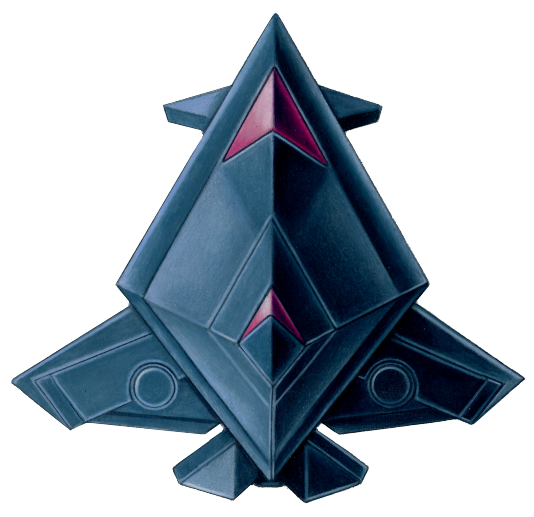
AM-12A ONYX GUNSHIP RANGE: 1600 miles ALTITUDE: 1000-15000 ft. AIRSPEED: 650 knots The mothership's primary defender was the Onyx, a heavy gunship which detatched to fly escort duty during bombing runs. The Onyx is twenty five meters long and built around a single directed energy weapon such as a maser. Each septune carried two of these, each with its own crew of four - pilot, two co-pilots, and gunner. The Onyx used its heavy beam weapon to destroy ground-based air defenses, melting them or setting them ablaze to pave a path for the mothership and her bombs. The Onyx could take significant punishment due to its layer of armor, and would be sacrificed if necessary to facilitate a successful bombardment. It was not built to engage in air-to-air combat, a role reserved for its own set of parasite Arrowhead fighters. Once deployed, it could not rejoin the Dusk mothership and was forced to either make its way back to base indepedently, or simply crash in such a way as to cause even more damage or (at the very least) render the aerodyne completely impervious to salvage, recovery, or analysis. Though more maneuverable than the Dusk, the Onyx had no stealth capabilities of its own and relied entirely on its mothership until deployed. Even its maser weapons weren’t activated until it was launched, making it rather vulnerable until then. It took about thirty seconds to spin up and detach, or about 15 seconds if already prepared for an attack run. Once airborne, it would drop a significant distance before firing up its light reactors and accelerating to attack speed, generally only a few minutes before reaching the main target. Its role was to either distract or destroy ground-based defenses, so it flew quite low to the ground and was usually subject to anti-aircraft measures. By drawing them out or exposing them, it would help the Dusk bomber avoid anything that might be powerful enough to shoot it down. The sound of its flight is quite a memorable experience, a thrumming crackle of pulse-detonation made by Positive and Negative energy coming together in its engines. Details: The Onyx uses a combination of experimental technology that wasn’t fully mature. As a result, damage caused to its reactors or engines could result in a catastrophic explosion. For this reason, they weren’t spun up prior to deployment, and had a small chance of simply exploding on activation. This happened to two of the ships deployed on the Day of Victory and remains a hazard for anyone who cycles up the engines, whether to repair them or use them in flight. The relatively small chance of such a disaster is one reason the Decider doesn’t use her Septunes, as she’s well-aware of the issue. The Dusk is a little bit more comfortable than the Dusk or the Arrowhead, though it’s built for cepn and pulls off maneuvers that would give non-cepn a very hard time fighting air-sickness.
Mechanics: The Onyx fires masers, which can be treated as a 13th-level Disintegrate effect with a 3000’ range. It was made to be used on ground installations as opposed to people, so there’s no sort of saving throw – it just vaporizes any exposed target and can only be deflected by extraordinary means. The gunner can lower the setting to bathe an area in Heat Metal instead, cooking all metallic objects in a 30’ radius from the same range. Unlike the Dusk or the Arrowhead, its experimental engines allow it to slow to near-hovering speeds (60), or accelerate to around 500 miles per hour over the course of a single round. It can also fly sideways in an orbital strafing attack if necessary, and land on flat areas that aren’t considered difficult terrain. This allowed it to be used in recovery pilot operations if necessary. This could be considered a lesser dragon, of sorts, or at least on par with one for the purpose of causing damage from the air.
|
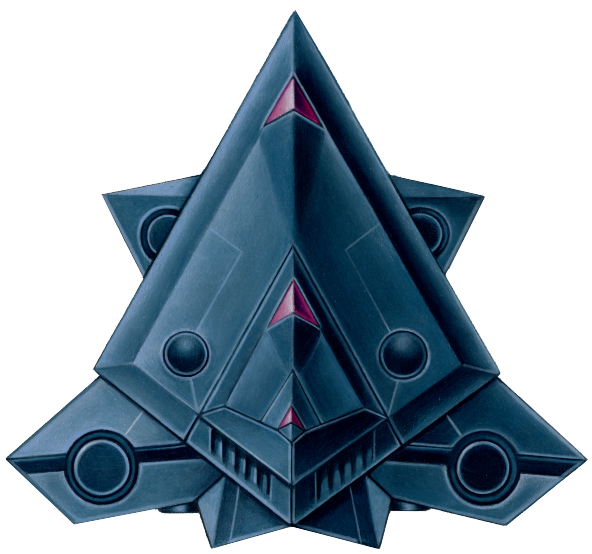
AM-9B DUSK HEAVY BOMBER RANGE: 4500 miles ALTITUDE: 4000-35000 ft. AIRSPEED: 650 knots The massive mothership was sixty meters long, built mostly of aeromet and powered by four heavy light reactors. It achieved flight by way of a mile-long underground launching rail, unfolding its wings at the height of its trajectory and ascending to great altitude prior to engagement. The Dusk Heavy carried a compliment of eighteen, half of whom were crew for its assortment of parasite fighters. It could remain airborn for an entire night operation and return for recharge and re-assembly before dawn's first light. Aside from its gunships and interceptors, the AM-9B also carried enough bombs to destroy a town all by itself. This was the first bomber built exclusively for cepn pilots, kept hidden until the last phase of the Automatic War. Aethos allowed Eprix Ton to take credit for its design, though it wouldn’t have been possible without the miracle metals that went into its construction. Aside from its deadly payload, the Dusk’s most fearsome feature was its ability to fade, a sort of semi-invisibility that made it almost impossible to stop at a distance. Since it only flew at night, the only way to observe it was against a backdrop of moon or stars, and by then it was often too late to intercept. Aktek-Militar didn’t expect a high survival rate or a need for more than a few uses, and so these airframes weren’t built to last. The Decider has two of them in one of her hangars on Paradise Gold and is currently sourcing parts to restore a third. She won’t use them without a very good reason, however, as they don’t have enough range to make it all the way to Ran-Lir and back. Details: This mothership was made to deploy its miniature fleet close to its target and so this is the only time where it’s somewhat vulnerable to attack. Until then, its best defense was altitude. The Dusk cruised at twenty thousand feet or so, high above the attack range of most enemy forces. Even dracomorphs and angelic warriors had a hard time finding it at the edge of the stratosphere, and could only hope to intercept its descent course prior to fighter deployment. The bomber has no weapons save for its dropped ordinance, though its escorts could be prepped and launched within about thirty seconds, or less if the pilots were already seated in their respective vessels. The Dusk isn’t very maneuverable, either, though it becomes more agile once its escorts are deployed.
Mechanics: If the Dusk reaches its target, it will drop a huge payload of bombs. This is almost always lethal for anything in a strip a mile long and a quarter mile wide. The damage is caused by a combination of deep-penetrating AM-B01 Earthquakers and AM-B04 Firestorms – a combined Earthquake and surface-scorching Incendiary Cloud effect at 18th level. The effect is devastating to non-fortified structures and subterranean complexes, and even those which somehow survive one effect will usually succumb to the other. It must be stopped from reaching its target zone, especially if there’s more than one, and due to its advanced cepn acoustic ground-mapper, cover is completely useless. This was the elder dragon of its day – consider the bombing path to be its breath weapon, with only a single pass required to destroy an entire town, or mortally wound even a large city.
|
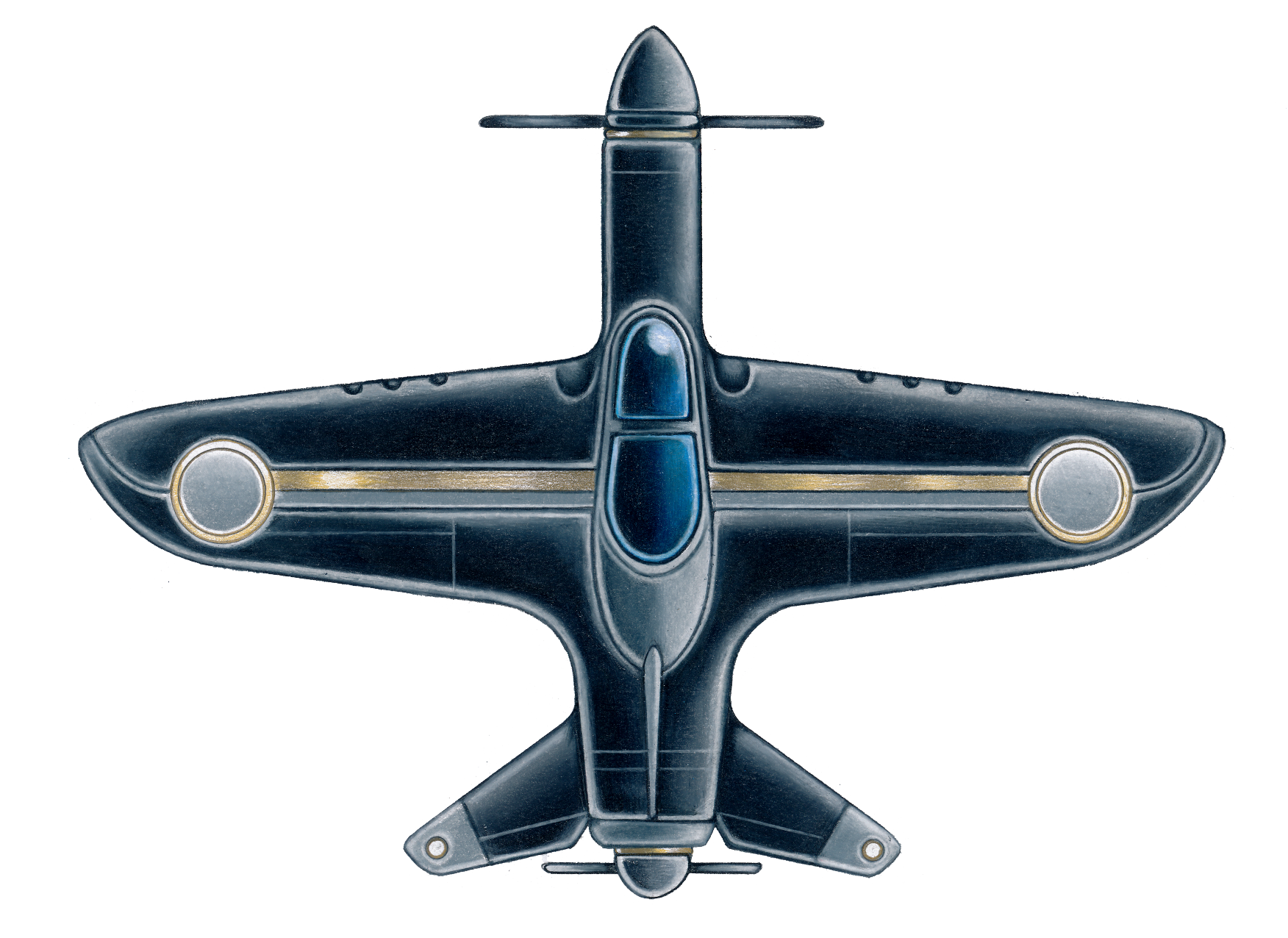
AM-88N SHADOW RANGE: 1200 miles ALTITUDE: 500-15000 ft. AIRSPEED: 400 knots One of the most common air-fighters of the Bygone was the AM-88 Shadow, seen here in its final form after years of development. Put simply, the Shadow was made to be small, agile, inexpensive, and fit for mass-production. The 88N, in particular, showcased Aktek Militar’s budget-stretching capability by standardizing nearly all of the aerofoil’s components, its monocoque fuselage, its weapons, and even the pilot training. After years of clumsy biplanes and disposable solid-fueled tail-sitters, the Shadow became the most successful evolution of airframe design until the advent of the jet aerodyne. This miniature light fighter was exceptionally cheap to mass-produce and though not as effective in combat as later models, it held its own against all manner of airborne opposition and provided a flight-training platform for countless pilots. The Shadow was deployed in vast attack wings and used in massed strafing runs against enemy infantry when not cutting through enemy air power. Though too small and light for any sort of significant bomb, it was able to carry six pinguns, three per wing, which would shred even large unarmored targets or groups of soldiery. Shadows are small, nimble, and easy to handle, and commonly used by the Arcanar guild to punish communities which offend them in some way, either directly or indirectly. The Decider will also send out punitive packs of these fighters to hunt down dragons, angels, demons, or other winged supernatural creatures located by ground-spotters. They can be found at almost any aerodrome, often lined up in neat rows, though they’re still rare and precious, carefully maintained and jealously-guarded. They were mostly obsolete by the time of the Automatic War, but still used by Aerocon cadets to train and to determine the would-be pilot’s flight tolerances. Many of them had their secondary powerplant removed and replaced with a second pilot compartment for an instructor. Details: The interior of the aerofoil is cramped and best fitted to smaller people, though anyone of Medium size can fly one. Small pilots will find it much more comfortable, even roomy, and while there aren’t any sorts of accommodations, most models have a small storage space that can hold a backpack and a few weapons. The Shadow is so-named for its ability to ‘shadow’ larger aircraft or enemy flyers, though it was also considered to be just a ‘shadow’ of its more robust earlier variant, the Nightraker. As with most aerofoils, ammunition for the weapons is extremely difficult to find, and so the Arcanar have made focus apertures so they can deliver line-of-sight attacks from their own weapons when the built-in armament isn’t available. The Shadow has a lot of range but after an hour or two the buzz and engine vibration can inflict a lot of fatigue upon even veteran pilots.
Mechanics: These are just about the only sort of aerofoil that you can always expect when the Arcanar or Tradewind Guild go on the warpath. They’re rare, but not so rare that they won’t be invested in hunting expeditions or to perform air reconnaissance. Their high speed and maneuverability make them ideal for dogfighting, and while they may not pack the punch of the larger aerofoils, a group of them can shred a small town or large beast with raking fire and expect little to no retaliation. The pinguns are essentially Magic Missile swarms, with each strafing pass dividing 18 missiles between up 2-8 eight targets. The only way to avoid this fire saturation is to take cover or break line of sight, and even barriers might be torn apart after a pass or two. The ammunition is limited to six strafing runs after which the Shadow is pretty much toothless.
|
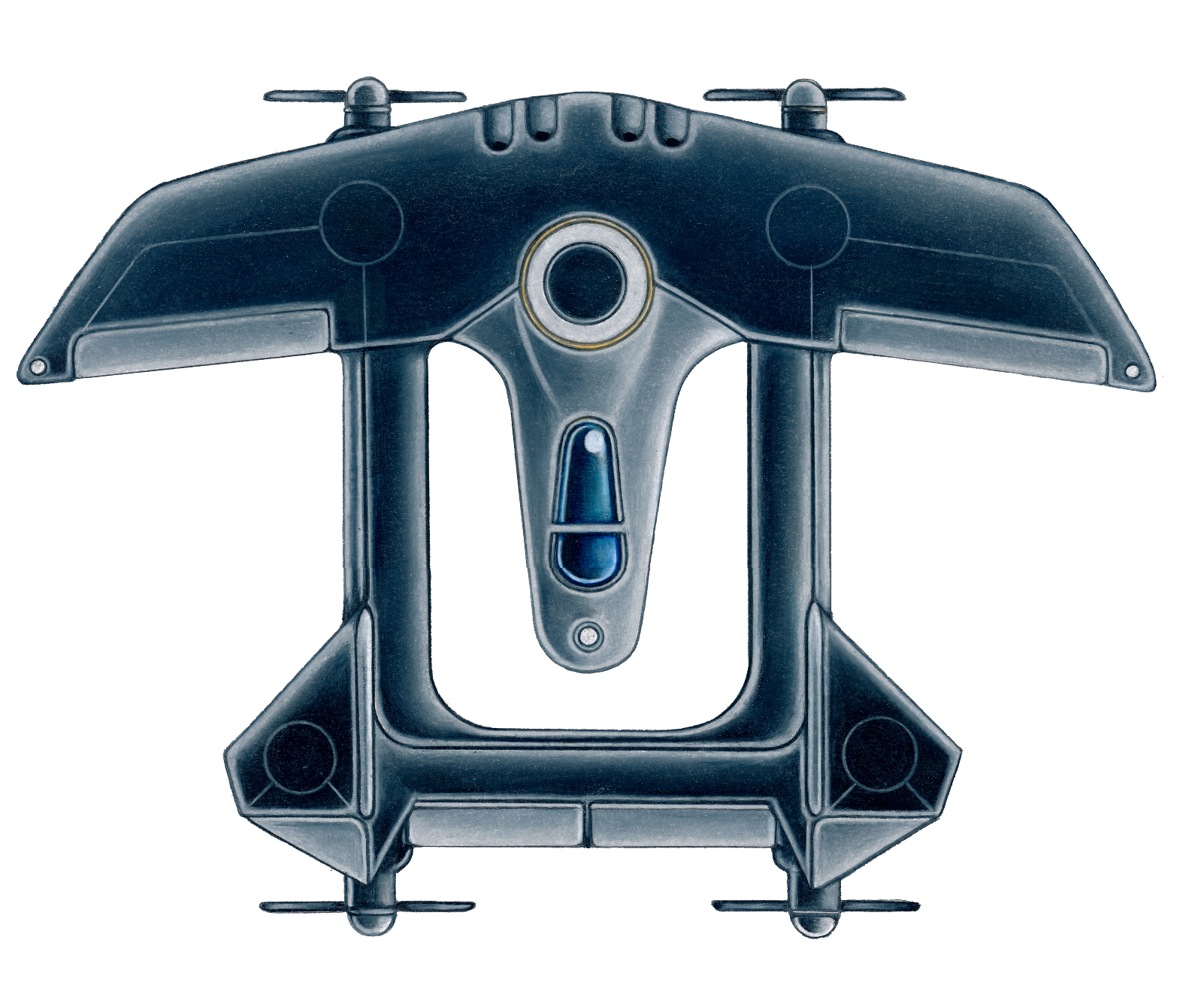
AM-78F MOONBAT RANGE: 2600 miles ALTITUDE: 2000-20000 ft. AIRSPEED: 340 knots (tailed) or 450 knots (decoupled) The Moonbat was one of Aktek Militar’s long-range fighter escorts, an aerofoil designed to intercept and eliminate other flyers. Its troubled development was largely the result of its complexity and costly manufacture, but also due the pilot skills required for its dual combat role. Before the Automatic War it was used to escort zeppelins or ships, and some were even kept aboard flat-top sea carriers for defensive purposes, loaded with depth-charge bombs or torpedoes in instead of automatic cannons. They saw some action at the start of the war, though by then other, smaller fighters were more popular due to their low cost and expendability. The development of the aerodyne rendered the Moonbat obsolete, though for some time it was kept as backup stock, with hundreds of them stored in underground hangars where some may still be found to this day, preserved by Quiet Air and a specialized coating of shellack. These still require restoration, but far less than those found out in the wasteland or even in the service of the Tradewind Guild, who will pay up to 75000 pazools for a ‘fresh’ hangered aerofoil. The Moonbat was larger than most heavy fighters of its day, a flying wing with a detachable twin-boom tail segment for extra fuel and propulsion. Depending on the type of engagement, the rear section could be retained for extra range or jettisoned for higher maneuverability. In the latter case, the Moonbat would extend a pair of secondary nacelle canards for stability, converting to a light fighter within moments and engaging smaller enemy targets with four automatic guns spaced across the leading wing edge. Though the ammunition for these guns is no longer made, many of those in storage still have a full shell carousel, covered by the large circular disk seen just forward of the cockpit. The Moonbat is slower in its tailed configuration, but much faster and more maneuverable as a light fighter, and in air-to-air combat with the forces of the old divinity, it could take down wyverns or even smaller dragons one-to-one. Details: Though it can carry a small load of bombs, the Moonbat’s focus was range. It was made to escort, whether zeppelin, sea carrier, or bomber. The speed and agility of its flying wing configuration was phenomenal, especially in power climbs or strafing runs, though in this form it ran out of fuel within about half an hour and would frequently be forced to ditch after the engagement. The flying wing component was heavily armed, dedicated to weapons and ammunition, while the twin boom of the rear section contained the extra fuel reserves and secondary power plants. The quad-propeller configuration allowed it to maintain flight even with two engines shot out, though any asymmetric loss would force the aerofoil out of combat or prevent boom detachment. It was surprisingly quiet for a quad, though its four automatic cannons were considerably louder than the armament of light fighters.
Mechanics: The Arcanar Guild and the Tradewind Guild both stock a fleet of these aerofoils since they’re easier to find in working condition and can be maintained without the Decider’s direct involvement. They pre-date the more advanced designs she prefers, and so she assigns them to specific Arcanar pilots who prove themselves worthy of joining her air squadrons. The Tradewind Guild maintains thirty of their own Moonbats to escort particularly valuable Aeromax shipments, and several airfields where they can take off and land between all the major cities. Neither guild will sell them to non-guild members and if spotted without the proper badging, they’ll either be seized or shot down depending on where they’re spotted. Like most of the older aerofoils, they recharge on Radiant energy, either by long sunlight exposure or else direct radiance charges (1 to 1 damage = minutes of flight time). Though they may appear armed, most now contain a focus aperture for the use of more varied Arcanar attack-effects like Fireballs, Lightning Bolts, Magic Missiles, etc.
|
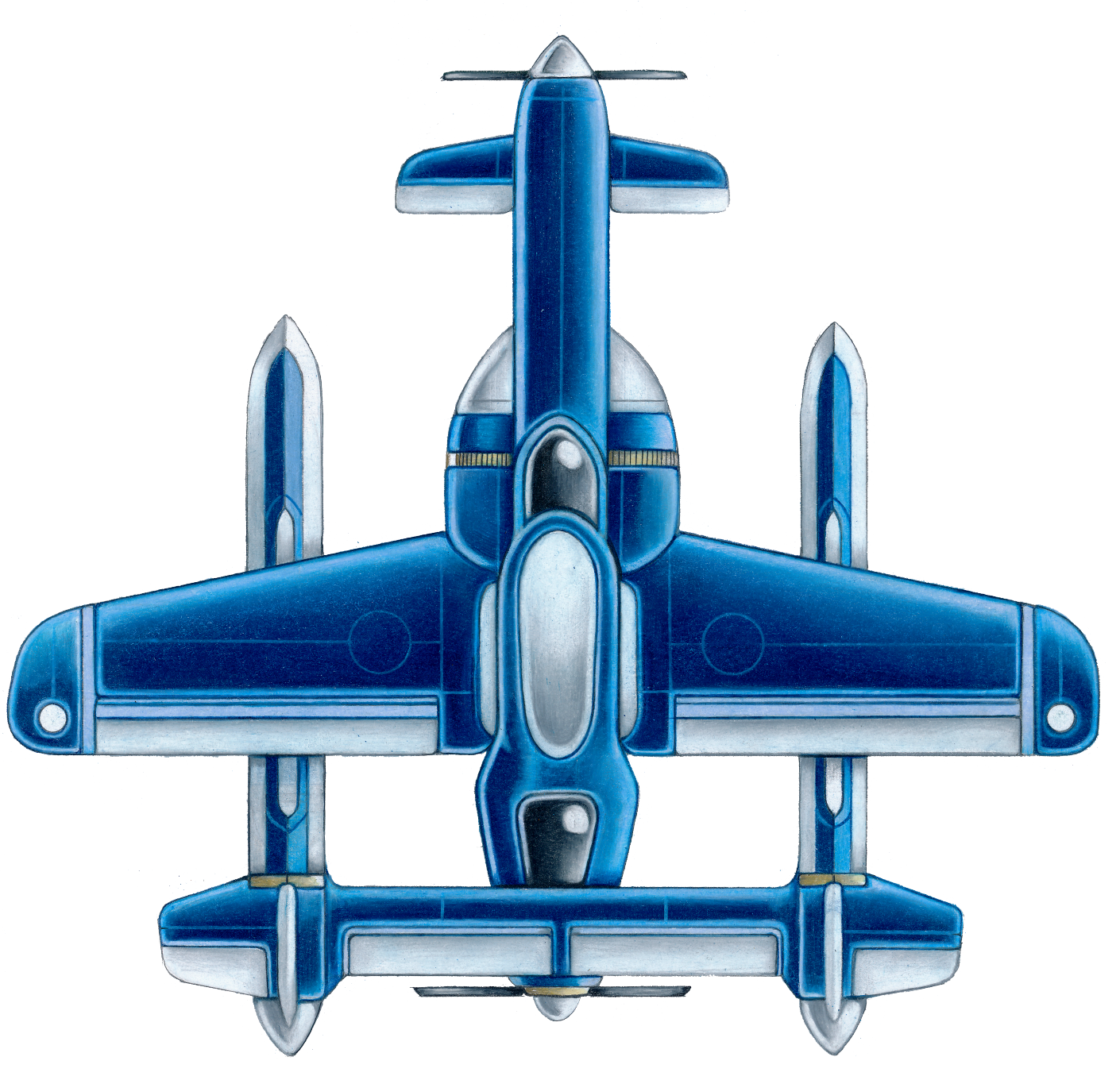
AM-82T SKATE RANGE: 1600 miles ALTITUDE: 2000-15000 ft. AIRSPEED: 350 knots CARGO: 2500 lbs. The Skate started as a commercial seaplane, alternately used for recreational travel or small deliveries to remote islands. Originally designed by Altus Balluuni, the Skate would eventually be acquired and redesigned by Aktek Militar as a coastal patrol craft, equipped with a variety of different weapon loadouts for naval escorts through contested waters in the early years of the Automatic War. It wasn’t a very good fighter when compared to models that were designed from the ground up, but it had been polished for years and most of its issues were worked out long before its conversion to military service. Aktek Militar didn’t change much aside from giving it more powerful engines, bomb racks, and automatic weapons, and as a result it was more comfortable and ‘civilian’ than the fighters which came after it. In fact, it was downright liveable, with a rear section large enough for a second cabin compartment or even a small cot and storage space. The Skate can land on runways, beaches, sea, and snow, with a range of customized pontoons for each environment. Its relatively sturdy chassis made rough landings a lot easier to survive and even in combat it was remarkably resilient, surviving damage or ditches that would kill the pilots of newer dedicated fighters like the Dolphin or Marlin. It was deployed more often for escort or rescue operations and saw only minor use as a dedicated fighter, and was retired soon after the development of AM’s jet aerodyne. They’re very valuable these days, even as scrap, and the Arcanar Guild is always looking for hulks or parts, often paying double for the more antiquated, higher-quality components that went into their construction. Details: Too large to be an effective fighter and too small to be an effective bomber, the Skate served a support role in most cases. These days they’re a coveted prize for exactly that reason: versatility. Skates can land almost anywhere, and in a world whose runways are in ruins, this makes them valuable. They can carry an adventurer’s cargo, a companion or two, and even a small living space. They don’t fly as high or as fast as an aerodyne but they can take you places you’d never reach otherwise. The ammunition for their weapons is no longer made, but that doesn’t mean they can’t be equipped with alternatives, and while they’re coveted by the Guild, the Decider has enough of them to allow their sale to others who earn Tamaran favor. Gorgs are too big to fly them, but love to collect them all the same, and might also sell them to those with enough money. You can expect to pay between 50000-100000 pazools for a basic model.
Mechanics: This is your little dragon, your first taste of flight with bite, as they used to say. Topping out at 350 miles per hour, with a 1600 mile range, the Skate allows fast travel without having to pay the Tradewind Guild. It flies in cold or hot climates, lands just about anywhere with a body of water, and carries up to 2500 pounds of cargo load that was once reserved for bombs and ammunition. It runs on radiant energy – a pair of luxite batteries which regenerate over time, or with channeled radiant energy (1 to 1 damage = minutes of flight time). In game mechanics this a bit like having a flying carpet, albeit with a canopy and climate control. It serves the same essential function, and though considerably faster, it can only fly for about five hours a time before it needs to land and recharge.
|
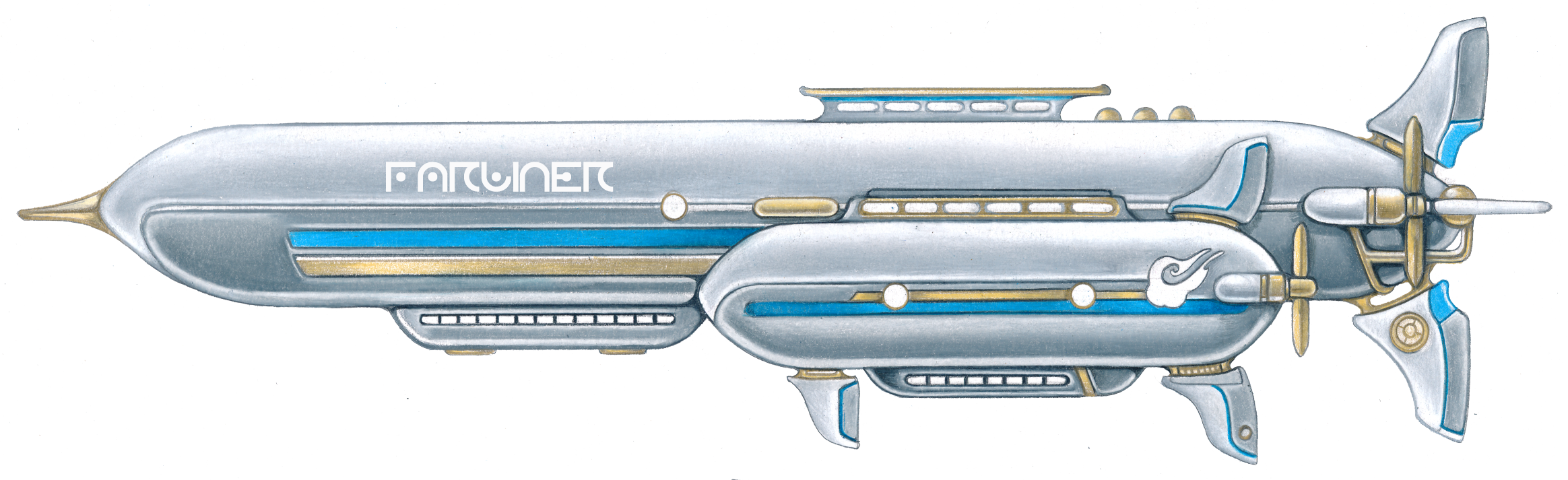
BALLUUNI FARLINER VEHICLE RANGE: 12000 miles ALTITUDE: 2000-8000 ft. AIRSPEED: 30-40 knots PASSENGERS: 400-1200 CREW: 42 This was one of the largest commercial air carriers of the Bygone, a design which evolved over the course of some fifty years from a simple dirigible novelty to the immense, triple-enveloped wonder made possible by the miracle metal called aeromet. The zeppelin was actually three aircraft linked together, its main section flanked by secondary detachable pontoon segments. This gave the Farliner a degree of modularity and stability, and made it large enough to carry more profitable numbers of passengers. Some models were made for luxury, boasting large cabin suites, sun decks, and even restaurants, while others were built for the economical accommodations of mass air travel, which was still quite a novelty even at the height of the Byone. Regardless of the interior design, the Farliner was the largest name in air passenger transport and the Tradewind Guild has spared no expense in helping rebuild and refurbish four of them. These are the guild’s crown jewels, reserved for travel between their aerodrome in Haun and the Western Territories, especially Tamara, which was gifted one of them in tribute to Her Excellency the Decider. The Farliner is just over 1200’ long, with two separate 500’ foot-long pontoon craft. These are mounted on tracks which allow them to be shifted towards the bow or aft as ballast requires, though they’re usually aft. The detachment sequence is simultaneous, allowing the Farliner to split its stately course into three different destinations or even pick up new passengers in mid-flight. The lift gas is helium, while the airframe itself was constructed of super-light aeromet and aeromet foam, which was one quarter the weight of aluminium and twice as sturdy. Details: The luxury liners had 80 deluxe cabins with beds, dining tables, viewing windows, and private restrooms, while the econoliners substituted bulk row seating. The modular nature of the pontoons allowed a reconfiguration in mid-flight, with some very wealthy individuals purchasing or leasing their own and hitching a ride for longer journeys. All Farliners had food service or a restaurant, observation decks, and even a topside platform for low-altitude cruises. Despite the seemingly-perilous nature of air travel, these craft were wildly popular and, though slow and even somewhat impractical, they were considered to be a triumph of the era. Those restored by the Tradewind Guild are used only for the most important passengers and only on special occasions, or when they guild wants to impress its rivals.
Mechanics: Bigger than any sailing ship, though more limited in its crew-carrying capacity, passage on one of these ships is a rare luxury costing 1000-8000 pazools depending on accommodations. This will take you anywhere on the continent in style, as long as you’re going somewhere important, or you have your own way down along the way. The standard routes are predicably-scheduled, generally once per week; if you’ve got a few days to wait around in one of the major cities, you can purchase passage from a Tradewind Guild merchant, or directly at one of their aerodromes. The crew are extremely competent and won’t put up with any sort of trouble, however, and those who put the craft or the other passengers in any danger will be kicked off, or even hurled overboard. They don’t much care for stoways either, so make sure you have your ticket handy at all times. Travel between major cities takes 2d4+2 days on average, though some pleasure cruises take longer.
|
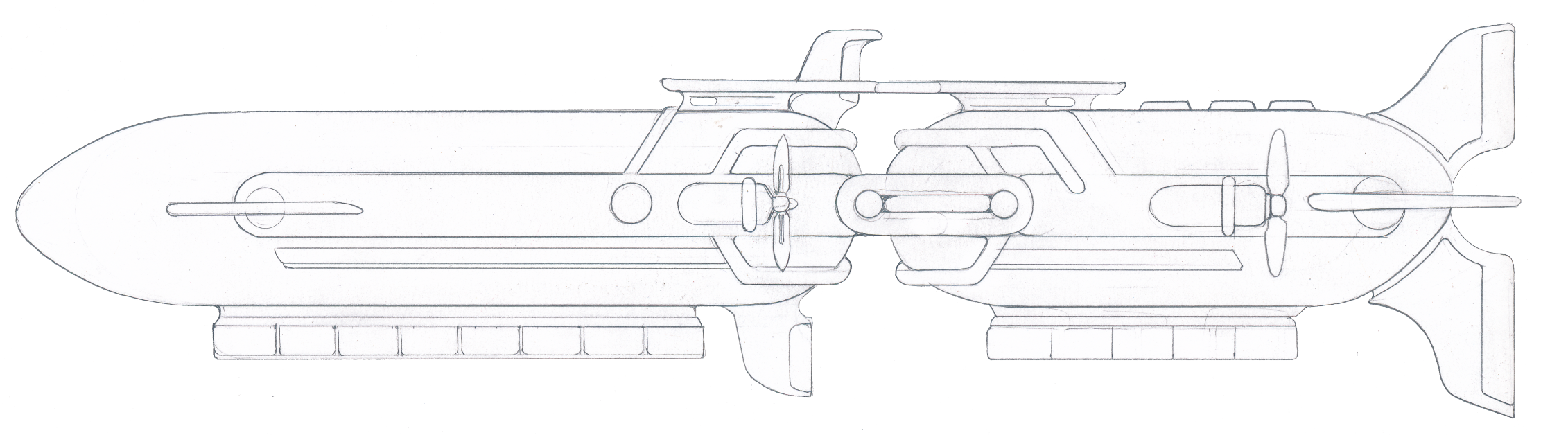
BALLUUNI AEROMAX VEHICLE RANGE: 8000 miles ALTITUDE: 2000-8000 ft. AIRSPEED: 20-40 knots CARGO: 20-40 tons CREW: 30-40 This was the workhorse of the Balluuni zeppelin line, an experimental cargo-lifter that delivered material of great importance to difficult locations. Though never practical for commercial civilian cargo, the Aeromax was often commissioned by other Titans to move equipment of a sensitive or secret nature, or else to transport high-priority items. It was also useful in delivering such items to remote locations without any other sort of landing zone – islands, mostly, or arctic terrain. It had two sections, the main body and a detachable secondary envelope which was used for more dangerous goods, or else to allow dual destinations. Unlike the passenger zeppelins like the Farliner, the Aeromax was all business and had very sparse crew quarters, with minimal accommodations for the two or three dozen crew members. The rest was all dedicated to cargo box freight, hung beneath the envelopes on a rail system. These rails ran the underside length of both segments and were full retractable, allowing the suspended cargo crates to be shifted back and forth and then lowered by a complex block and tackle system, or else shunted to the detachable rear vessel prior to direct descent delivery. This would allow the forward section to continue on or even return and refuel its helium tanks while cargo was being unloaded or set up in its new location. The design turned out to be wildly impractical, but Balluuni insisted on making improvement rather than scrapping the concept entirely. The Aeromax is just over 900’ long, split between its 500' main section and 400' tail section. These sections could separate, much like the pontoons of the passenger-carrying Farliner, though this was mostly to allow work crews to bring down half the load while the other half went elsewhere, and because many deliveries involved construction equipment and building projects. As with the Farliner, the Aeromax used helium lift gas in an ultra-light aeromet frame. The Tradewind Guild has restored eleven of these giant airships over the last two centuries and maintains them as its main revenue generator, transporting valuable material deemed too important to risk at sea or over land. Mostly these are relics of the Bygone being transported to the Twin Paradise, contracted by the Arcanar Guild to make sure they reach their destination. Details: This ship carries two rows of suspended cargo boxes, or aircans – 16 under the front section, and 10 rear. Each can hold up to 2 tons of contents, often high-value items or even people, though the latter require special accommodations at high altitude. Most of the cargo comes out of Axis or the bazaar island called Hotzone, with the Arcanar Guild paying a regular transport fee to lift relics from the wasteland for delivery to the Twin Paradise, or to wealthy gorg collectors in Haun. Cargo boxes can be hoisted up from a height of roughly 500 feet, and in some cases the ships will separate so one can cover the other with ballista-type weapons or even bombs – they take security more seriously in some places. The crew themselves are often trained to repel attackers, especially if they’re working an Arcanar contract, and in such cases it’s likely they’ll have a few of their wizards on board to keep an eye on the cargo.
Mechanics: Need to move a major find or treasure? Look no further. If you locate a salvageable aerodyne or a bank of vendomats, need to move a massive caged monster, or just want to build a home on some exotic island, you’ll need one of these. Shipping is 1-4 thousand pazools per ton base, with and additional pazool per mile of transport. Transport can be scheduled within 2d4 days from any major city, or 3d6 days outside of a major shipping route. This adds a 50% surcharge, but the delivery is guaranteed. As a courtesy, they’ll transport the owners as well, though if they have a full crew, the passengers will have to travel with their cargo in the aircans. Depending on the distance and weather, this can be a long ride – usually 3d4 days. The Aeromax is a slow beast, though it flies over even most hostile territory or terrain unimpeded due to the Tradewind Guild’s neutrality pact, extended from Haun itself and backed by titanic investments in reputation. Anyone who attacks or brings down one of these zeppelins will be hunted for an equally-titanic reward.
|
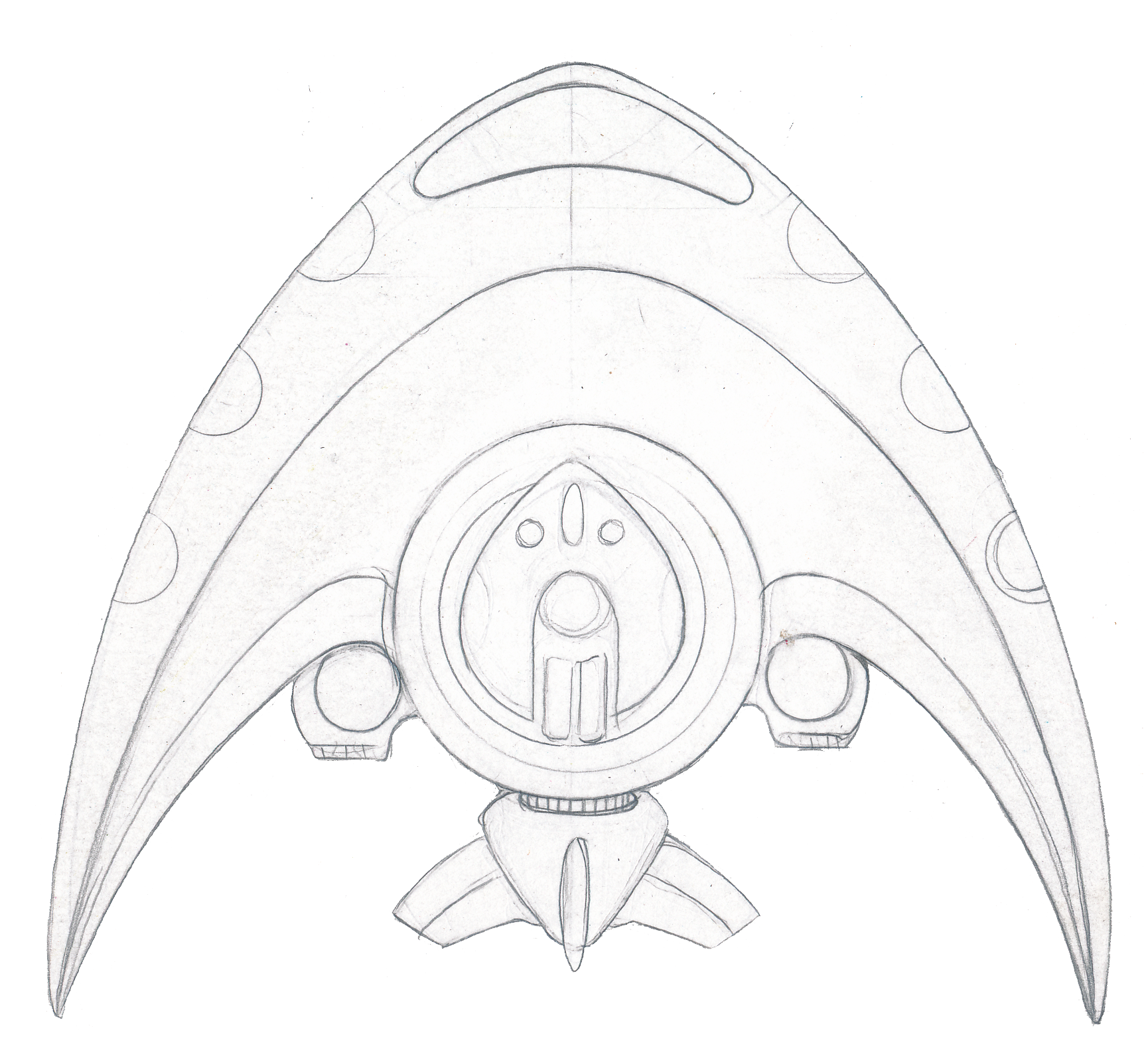
AM-31U BATFISH RANGE: 800 miles DEPTH: 10-5500 ft. SPEED: 30 knots The Moonbat was one of Aktek Militar’s long-range fighter escorts, an aerofoil designed to intercept and eliminate other flyers. Its troubled development was largely the result of its complexity and costly manufacture, but also due the pilot skills required for its dual combat role. Before the Automatic War it was used to escort zeppelins or ships, and some were even kept aboard flat-top sea carriers for defensive purposes, loaded with depth-charge bombs or torpedoes in instead of automatic cannons. They saw some action at the start of the war, though by then other, smaller fighters were more popular due to their low cost and expendability. The development of the aerodyne rendered the Moonbat obsolete, though for some time it was kept as backup stock, with hundreds of them stored in underground hangars where some may still be found to this day, preserved by Quiet Air and a specialized coating of shellack. These still require restoration, but far less than those found out in the wasteland or even in the service of the Tradewind Guild, who will pay up to 75000 pazools for a ‘fresh’ hangered aerofoil. The Moonbat was larger than most heavy fighters of its day, a flying wing with a detachable twin-boom tail segment for extra fuel and propulsion. Depending on the type of engagement, the rear section could be retained for extra range or jettisoned for higher maneuverability. In the latter case, the Moonbat would extend a pair of secondary nacelle canards for stability, converting to a light fighter within moments and engaging smaller enemy targets with four automatic guns spaced across the leading wing edge. Though the ammunition for these guns is no longer made, many of those in storage still have a full shell carousel, covered by the large circular disk seen just forward of the cockpit. The Moonbat is slower in its tailed configuration, but much faster and more maneuverable as a light fighter, and in air-to-air combat with the forces of the old divinity, it could take down wyverns or even smaller dragons one-to-one. Details: Though it can carry a small load of bombs, the Moonbat’s focus was range. It was made to escort, whether zeppelin, sea carrier, or bomber. The speed and agility of its flying wing configuration was phenomenal, especially in power climbs or strafing runs, though in this form it ran out of fuel within about half an hour and would frequently be forced to ditch after the engagement. The flying wing component was heavily armed, dedicated to weapons and ammunition, while the twin boom of the rear section contained the extra fuel reserves and secondary power plants. The quad-propeller configuration allowed it to maintain flight even with two engines shot out, though any asymmetric loss would force the aerofoil out of combat or prevent boom detachment. It was surprisingly quiet for a quad, though its four automatic cannons were considerably louder than the armament of light fighters.
Mechanics: The Arcanar Guild and the Tradewind Guild both stock a fleet of these aerofoils since they’re easier to find in working condition and can be maintained without the Decider’s direct involvement. They pre-date the more advanced designs she prefers, and so she assigns them to specific Arcanar pilots who prove themselves worthy of joining her air squadrons. The Tradewind Guild maintains thirty of their own Moonbats to escort particularly valuable Aeromax shipments, and several airfields where they can take off and land between all the major cities. Neither guild will sell them to non-guild members and if spotted without the proper badging, they’ll either be seized or shot down depending on where they’re spotted. Like most of the older aerofoils, they recharge on Radiant energy, either by long sunlight exposure or else direct radiance charges (1 to 1 damage = minutes of flight time). Though they may appear armed, most now contain a focus aperture for the use of more varied Arcanar attack-effects like Fireballs, Lightning Bolts, Magic Missiles, etc.
|