




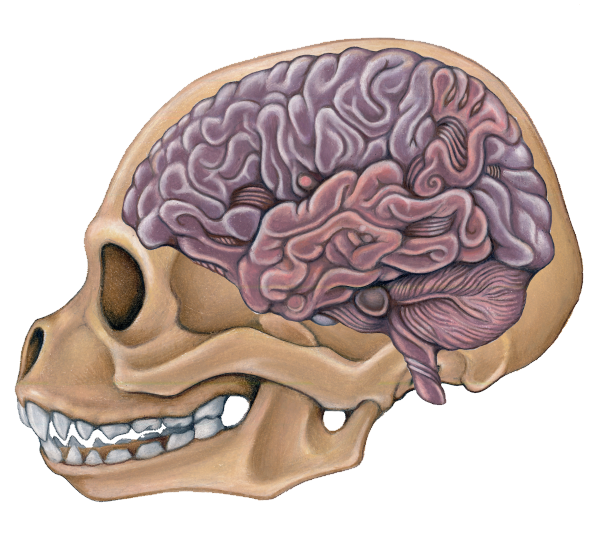
 From the wreckage of the Alburac, the gorgs elevated and emancipated the kuil from the collapsing Kobath Empire, granting them their own lands and lending them the wealth to start their own nation. This was the dawn of the Second Age. From the wreckage of the Alburac, the gorgs elevated and emancipated the kuil from the collapsing Kobath Empire, granting them their own lands and lending them the wealth to start their own nation. This was the dawn of the Second Age.
While the gorgs enjoyed their plunder and newfound power of their conquest, the kuil focused on all the innovation, art, and culture which had so long been suppressed. That they were never punished by the gods for their role in the ruination sowed the first seeds of atheism in their minds, and even those who still venerated the gods interpreted it as divine will as opposed to its refutation. They reaped their own spoils along with the gorgs, but rather than indulge in decadence and commerce, the ever-clever kuil were more ambitious. While the gods were struggling to save the last of the koba and the c’zath from destroying each other, the kuil saw them fail for the first time and more began to doubt their divinity. There was only one amongst the divine pantheon who didn’t blame them for losing faith, and for the first time he moved in secret to take their side. He told them, in one way or another, that their gods weren’t nearly as godly as they let on. Aethos, god of teachers, considered least among his brethren, took a liking to the kuil despite (or perhaps because of) their growing skepticism, and saw an opportunity to humble his divine kin and rise to greater prominence. Like the kuil, he would bide his time. With great care and subtlety, Aethos brought forbidden knowledge to the kuil, hiding his gifts among their mundane achievements by way of a select few. These were their Titans of Industry, the few minds capable of understanding his extraordinary secrets and taking credit for them to hide his involvement. He inspired their construction of countless wonders and weapons, new materials and strange structures, and even the name of their new dominion - the Creator State - as it flourished and expanded over the centuries of post-war prosperity. By then, the gorgs could only stand in awe of their former underlings, who were quick to discover that mountains of gold and luxurious indulgence were no match for their dirigible bombs and rocket mortars. Their empire fell to the Creator State with hardly a gasp, and the gods finally sought to intervene, as they had failed to do with the koba and the c'zath. They warned the kuil that despite their great achievements, they were still only mortals and subject to divine law. Unmoved, the kuil completed their conquest of the known world and made plans for the heavens and beyond, the domain of gods yet greater than their own. Their first and only attempt to reach outer space, helmed by the legendary Tan-Am, was struck down by the gods as a show or force, or divine decree – the true reason was never stated. The exploding rocket fell back upon the great launch plaza and killed thousands of Tan-Am’s followers, an event which would later be called the First Rebuke. This was the inciting incident of the Automatic War, the climax of the second age, an explosive growth of cooperative industry that Aethos could no longer control or even guide. The kuil set aside all their differences, and over the course of a single generation left a mark so astounding that even its ruins are a wonder beyond wonders. Greatest of all was the weapon they built to put an end to the divine order itself - Nigh. Nigh was built in secret by the titans. In their final defiance of the gods, they had created a monstrous weapon even he couldn’t have foreseen. Nigh took flight on the last day of the war, the Day of Victory, and the destruction it rained down upon the world was such that even its makers tried in vain to call it back. Nigh's weapon, the Fourth Light, was too powerful to control and even Aethos was forced to flee its devastating warpath. Entire regions sank into the sea or burned down to bedrock, and in the end the world itself was all but destroyed. This brought an end to the Second Age, and gave it the name by which it’s now known: The Bygone.
|
|


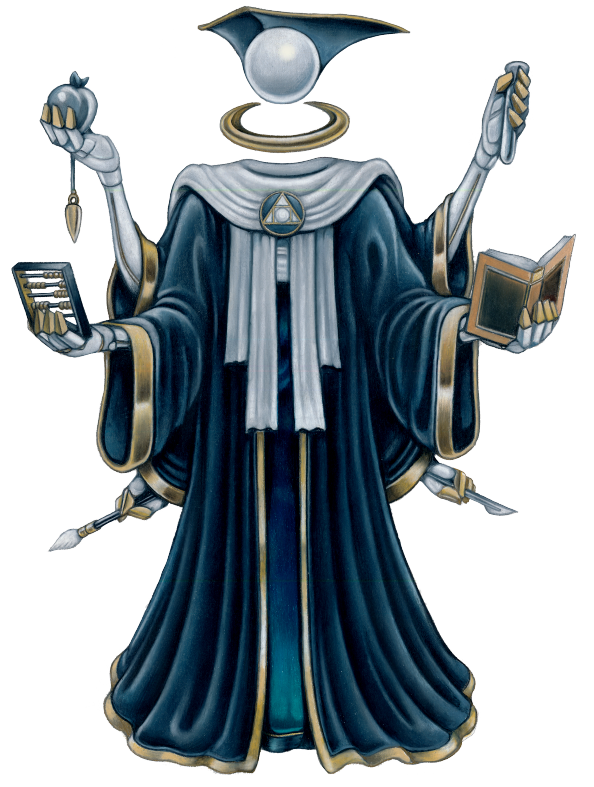
A former deity. Aethos was one of the Amai, Rym's terrestrial gods. He betrayed his colleagues in favor of Rym’s mortal inhabitants, aiding them in secret while the rest of his kind sought to control them. Eventually, he would help them overthrow his fellow deities, but in doing so caused a cataclysmic end to their civilization and the deaths of his brethren.
Perhaps Aethos really is a sympathetic entity, a being of terrible power and grand design reduced to destitution. Or maybe he’s gone completely insane. The people of Rym hold this opinion in equal measures, and nobody really knows his mental state with any degree of certainty. Aethos communicates primarily by radio, and is capable of carrying on a thousand conversations at the same. Likewise, he may occupy the body of any Machine as a possessing entity for the purpose of more direct interaction.
Redeemable: Aethos is filled with regret. In attempting to grant the kuil some measure of self-determination, he became their doom. Their subsequent massacre was an act of atavistic despair, perhaps even unintentional, and he only wishes to make amends before crumbling into ruin. Aethos will still appear for all intents and purposes as the proverbial mad artificial intelligence who steers Nigh through the upper atmosphere, but this is an illusion. He’s more of a lonely old scholar with only fragments of his former power, and just might be willing to assist any party working to fix what he destroyed. If they can cure his depression.
Irredeemable: Aethos regained control of Nigh, and went mad. All he wants now is to die, and to die he must first destroy Kij. Machines and automation are more dangerous, and more prolific as opposing forces. This version of Aethos has a particular vulnerability, however, in that Nigh will fall if he’s somehow challenged and destroyed (a truly epic task). This Aethos is exceptionally-cunning and may come off as redeemable, but it’s a ruse. He will use trickery to lure Kij into the open where Nigh can destroy her, and may be using the Decider and her Arcanar Guild as disposable pawns.
Capabilities: Aethos was the god of knowledge and education, and while his intelligence and his teachings weren’t as fundamentally powerful as the forces commanded by the other gods, he was capable of empowering mortals in ways the others could not. His favors were more subtle and indirect – he couldn’t produce fish from thin air, but he could teach you to catch them. His power depended on mortals more than any other, and this is why he took a more active hand in their influence. The other gods forbid the sharing of knowledge for which mortals were unprepared or unworthy, however, knowing that the worship they enjoyed relied to some extent upon ignorance and superstition, and this may have been what turned him against them. Rym’s humankind, the kuil, were similarly humbled by the larger, more impressive and wealthy gorgs who had long used them as pawns, and so more and more of his power and influence became an investment in their diminutive civilization.
Forces: Over the course of the Second Age, Aethos’ following of scholars, alchemists, astronomers and philosophers grew into a more subtle priesthood, losing its divine overtones and transforming into a network of cooperative knowledge whose giants were remembered not as saints, but idealogues. This would go on to inspire the Titans of Industry who came together in the formation of the Creator State, peak of education civilization which lived in the shadow of the Gorg Monopoly for centuries before rising to surpass it in the latter half of the Second Age. This educated elite used knowledge as power, and though they may not have known they were worshipping Aethos by then, their collective will gave him an incredible degree of power and control he’d never known during the First Age. By the time of the Automatic War, he was prepared to show his divine brethren that their supernatural power was no match for his science.
|
|

The industrial revolution of the Creator State was lead by the Titans of Industry, the cadre of eight leaders secretly chosen by Aethos to take credit for his illicit interference. In their meteoric rise to power, it was essential to conceal the way this rogue deity had been chiefly responsible. The Titans were chosen for their natural aptitudes, genius-level intellect, ambition, and charisma, and each of them became a sort of substitute god for domains once governed by divinity. In doing to, Aethos both reduced the power and influence of his fellow deities, and laid the groundwork for their future humbling at the hands of his own faithful nation. He made sure that outwardly, the Creator State rejected and disparaged him just as openly as the others, and bore their slings and arrows while the Titans took credit for the discoveries he handed to them. They may have suspected, but they never knew that he was their true patron.
They Collaborated: Some feel that the cooperation was impossible to deny, and that Aethos visited his titanic circle more openly to instruct them. He might have used a great knowledge engine called the City Mind to mask his face, but even the sophisticated Creator State never got close to artificial intelligence or truly powerful computers. Instead, they had a Wizard of Oz, a thinking machine capable of solving any problem, governing any city, or composing substitutes for divine wonders. The City Mind was a vast temple of sorts, a university city whose constituent population of academics worked in imitation of a computer, taking roles such as Central Processing, Math Computation, Heuristics, etc. All of this was a show, and the Titans knew it.
They Took Credit: But what if they didn’t know? What if they were just arrogant people who missed the disguised god in their midst on those Eureka days when a breakthrough was realized? Maybe they really did think they were the Titans, worthy of having their faces on the money, and the respect of holy saints whose defiance would finally liberate the mortal world from the old divine order. What if Aethos was so afraid of being discovered that he allowed their every achievement to be realized in spite of him, and saw past the humiliation to his ultimate revelation, when he would have no further use for the Titans and take the mantle of divine leadership of a perfected knowledge-worshipping civilization.
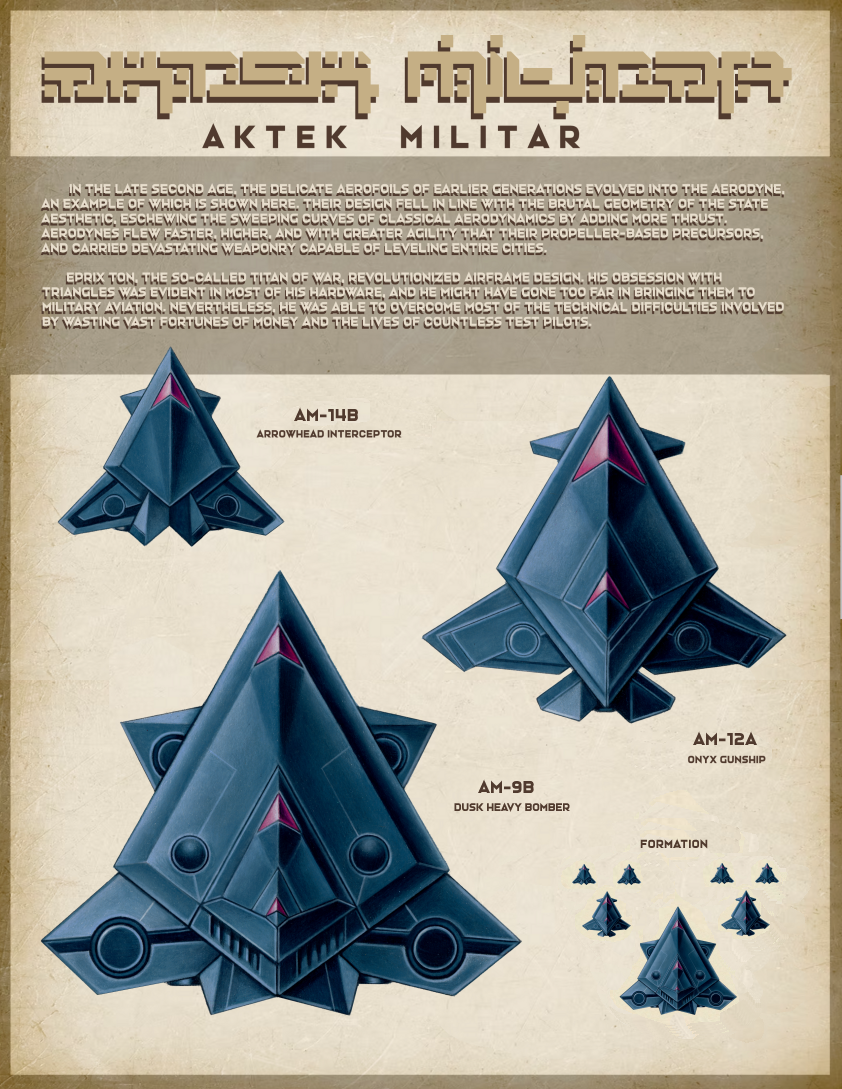
Capabilities: Let’s look at Aktek Militar (on the left), the Titan of War. This was the Creator State’s military giant, a corporation in the style of the old gorg monopolies. They made Eprix Ton its godhead, a man who practically invented air combat, long-range missiles, lasers, artillery, and other weapons to take on the fiercest monsters and magic of the ruling divine order. His aerodynes evolved from the first quaint and clumsy propeller-craft almost overnight, and delivered death from above to powers once considered immutable aspects of divine will – dragons, angels, giants, and floating cathedrals. This was only one of the Titans – others included Alto Seme (Blight-proof agriculture), Diamond Life (life extension and beneficial mutation), Maxton Macrolithic (wonder materials), and Balluuni Gasworks (atmospheric control). Their goal was to prove that the Creator State didn’t need gods, only higher education.
Forces: Each of the Titans commanded a vast swathe of the Creator State through control of education, employment, and plutocratic meritocracy. The more overt military forces weren’t taken very seriously at first, as Aethos had planned, counting on the State’s rabid ambition to improve them over time and eliminate any suspicion of his involvement. The early efforts to rebuke divine authority were a disaster, but over the years the State invested more and more of its efforts into declaring their independence and after the First Rebuke, war became inevitable. Diamond Life create entire races of animal hybrids immune to divine reincarnation, and even figured out how to create mechanical liches out of the people who feared what might lie at the end of their mortal coil. The culmination of this build-up was the Automatic War, and the end that was Nigh.
|
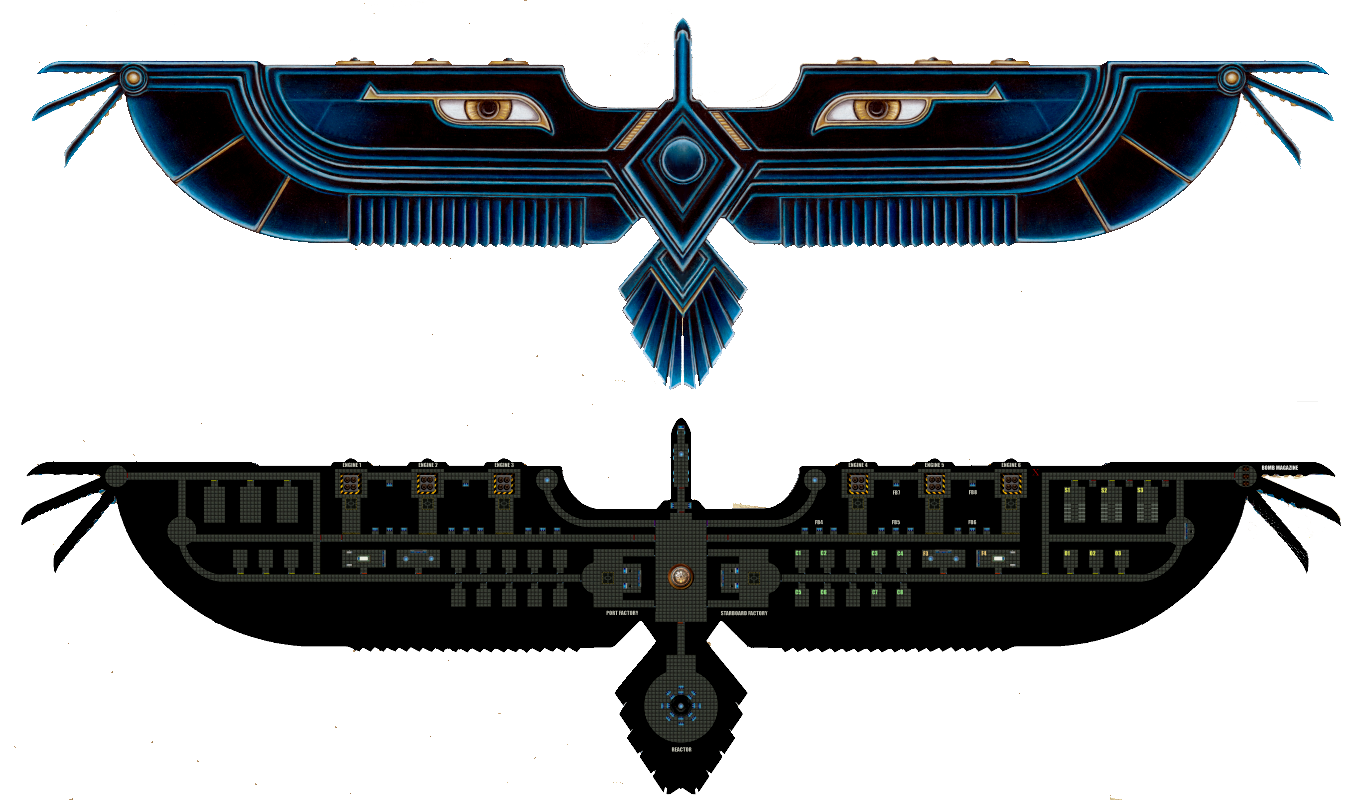 Internal Structure: Nigh is a flying temple of sorts, massive enough to hold hundreds of its followers and an arsenal of their nightmare weapons. Here you can see a rough outline of its interior, and the only way by which it can be brought down. One would have to find a way up into the ionosphere, breach one of its weapon or cargo apertures, and then make their way to either the gravity reactor or the cockpit – either contain the means to crash it into the planet below. Internal Factory: Nigh is large enough to contain its own factory. This is the wellspring of its supposed perpetuality, allowing the great Machine to produce its own components, munitions, and followers as they're worn out or expended. The factory is filled with specialized Machines of the highest order, a mechanized priesthood to serve their god's every command. The factory can construct absolutely anything aside from Thoroughbrace 0-H, whose schematics have been irreversibly corrupted.
|

Nigh was the largest aerodyne ever conceived and built by the Creator State. It was the embodiment of the Automatic War, a flying fortress of spectacular destructive weaponry meant to engage and destroy Rym’s reigning divinity and their legions of followers. It succeeded. A god in all but name, the colossal airframe has the semblance of a roc or condor, so large that it casts a shadow from ten miles up. Here it cruises, riding on roaring icy winds and watching for any sign of its remaining enemies. It circles the world once a day, scanning the ground with eyes which shift metronomically from side to side. These eyes face both up and down and, when fully opened, destroy almost anything on which they focus by way of a phenomenon called the ‘Fourth Light’. This gaze attack is reserved for its divine opposition - lesser enemies are obliterated by other means no less terrifying and incomprehensible. The craters seen on the world map are all its doing. It eradicated the embattled nations of the old gods in an afternoon, and disintegrated all but one of their pantheon. To this day Nigh remains airborne, slowly circling the globe in search of its final target, the goddess of the sun. It remains a barrier to her return, and to any true mastery of the old world's magic.
Ultimate Weapon: If you could seize control of Nigh, you could control the world. Though the cockpit is complex and filled with mummified pilots, it requires only a single set of hands to fly the old bird. This is what the Arcanar Guild has sought for centuries, and while they have a wide variety of plans, none of them are really realistic. If they could get a person into the cockpit, they would be able to exert absolute domination over every population, every, every faction, and nobody would be able to stop them from ruling the world. Some believe Aethos is the only way, or else some fabled master key which unlocks the control console. They would do anything to find that key. They just don’t know what it looks like, and the only one to ever reach the console had the wrong one.
Ultimate Sacrifice: But what if you had the key and didn’t want to use Nigh? What if you took control of the ancient war machine for another reason – to crash it on purpose. You would die, of course, a crash-course requires manual control and the automatic systems which govern flight would never allow it otherwise. But if you did bring it down, you would change the world forever by releasing the last goddess, Kij, from its endless pursuit. You would bring an end to the Proxies and most likely the Arcanar Guild in the process, who would not survive the loss of their ultimate goal. Crashing Nigh requires the key and about ten minutes of uncontrolled descent, and while the pilot would sacrifice their life, it would be a spectacular end the likes of which the world has never seen.
Capabilities: Nigh was built to deploy the most terrible weapon ever conceived by the Creator State, the Fourth Light. Delivered from high above, this light dissolves matter in an area ten to twenty miles across, turning it into hydrogen, which then detonates. The explosive force is enough to collapse an even wider radius into what’s known as a ton-crater, leaving a distinctive gouge in the landscape that’s visible from outer space. Unlike a nuclear bomb or other explosive, there is no radiation or fallout, only an acoustic shockwave that can be heard for hundreds of miles. The point at which the eye-beams cross is the focus of the effect, with a full minute required to focus on the target. Even the Amai and their most powerful followers couldn’t survive the Fourth Light, though extraordinarily fast-movers or teleporters might be able to escape its effect. In addition, Nigh hosts a wide variety of conventional ordinance, mostly bombs, and a host of mechanical avians designed to engage smaller threats.
Forces: Nigh has a sort of priesthood, a crew of crystal-fleshed avian Proxies. Technically a form of undead, they replaced or converted the original crew centuries ago, and replenish their numbers by killing and reincarnating others deemed ‘worthy’. Proxies are kept on board in large numbers, and dropped over target areas where The Enemy has been spotted. Otherwise they act as Nigh’s aircrew, wandering the halls of its immense airframe and helping the ancient war machine search for its last remaining divine enemy, the sun goddess Kij.
|