




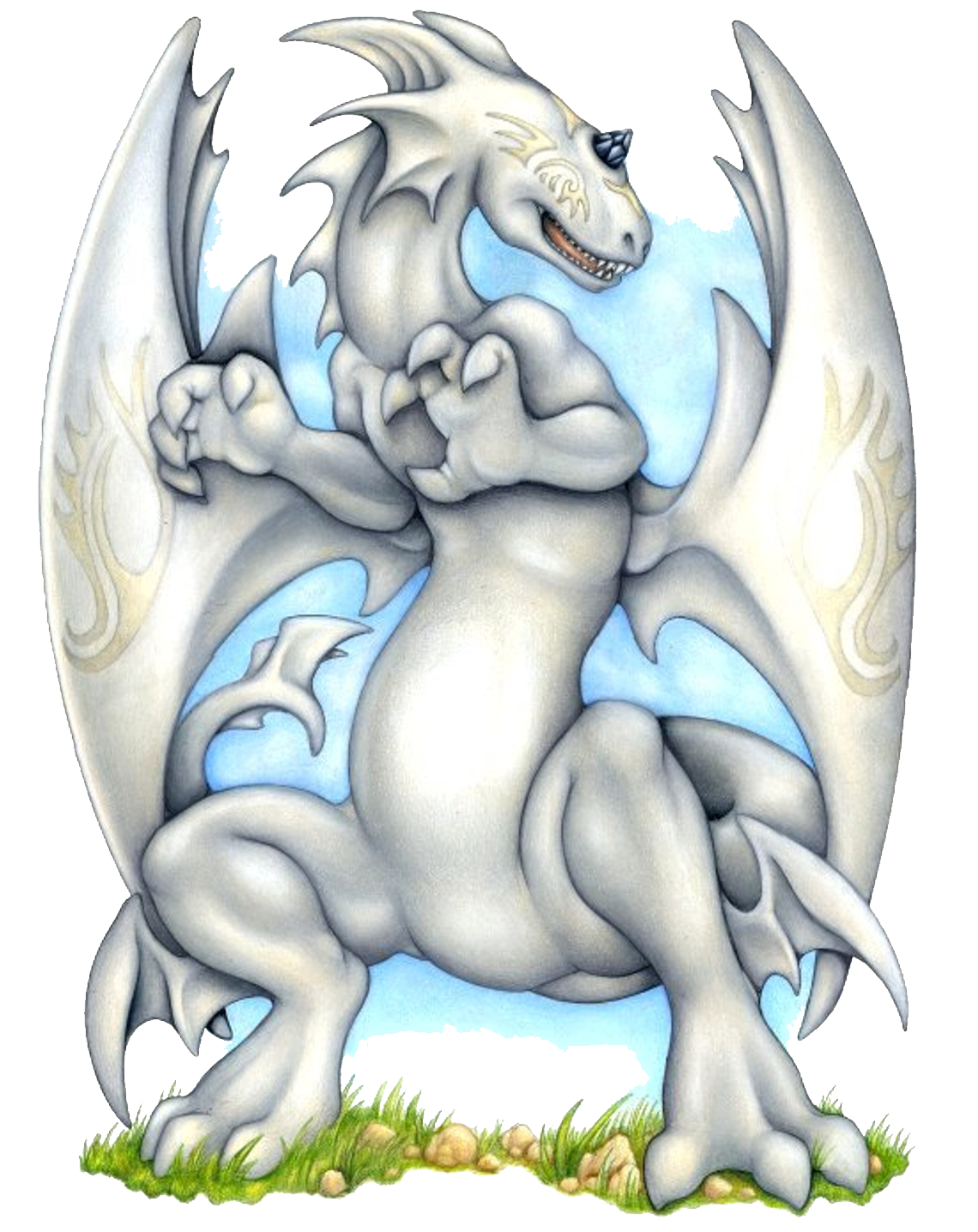
 The First Age was marked by the coming of the Urn and the reincarnation of the six extinct races it had found along the path of its cosmic wandering. These were Rym’s first civilizations, and to watch over them in its absence, it created the Onai, and the Amai. These were divine beings, a caste of caretakers to shape and guide the world after its departure. The Onai, the great ring of faceless moon-bound monoliths, were left to the dispassionate higher purpose and celestial mechanics of the Urn’s design, while the lesser terrestrial Amai were sent to take a direct hand in the affairs of the mortal civilizations, and to act as their gods. Both had their role to play in this Edenic era, though only the Amai were ever known to the primitive cultures of the First Age.
The Amai took forms of all kinds in order to act out their divinity, and under their stewardship, there were periods of peace and plenty, periods of war and plague, great monsters and heroes, and a balance in which all people played a part. The First Age was marked by the coming of the Urn and the reincarnation of the six extinct races it had found along the path of its cosmic wandering. These were Rym’s first civilizations, and to watch over them in its absence, it created the Onai, and the Amai. These were divine beings, a caste of caretakers to shape and guide the world after its departure. The Onai, the great ring of faceless moon-bound monoliths, were left to the dispassionate higher purpose and celestial mechanics of the Urn’s design, while the lesser terrestrial Amai were sent to take a direct hand in the affairs of the mortal civilizations, and to act as their gods. Both had their role to play in this Edenic era, though only the Amai were ever known to the primitive cultures of the First Age.
The Amai took forms of all kinds in order to act out their divinity, and under their stewardship, there were periods of peace and plenty, periods of war and plague, great monsters and heroes, and a balance in which all people played a part.
The greatest part, however, was played by the Kobath, the binary saurian species whose empire grew to encompass most of the world. Their great size and equally-immense architecture towered over that of the smaller civilizations, and while they were benevolent rulers, they overshadowed many who took less kindly to the scope of their dominion. The details of that age are a blur of myth and speculation, but most believe it was two of these in particular, the gorgs and the kuil, who conspired to cause the first cracks to appear the in the foundation of the Kobath Empire. While the plutocratic gorgs managed much of the empire's finances, the smaller human-like kuil were its egg-tenders and personal servitors, trusted for their unfailing tendency to worship and curry favor from the strong. Together, they began to widen the narrow rift between the worshippers of the two major kobath deities, Ceropa and Halut. Though omnivorous, the kobath were two distinct species, one more herbivorous, the other carnivorous, and though they sought to breed out the differences between their bloodlines, the delicate harmony of this effort was easily disrupted. The gorgs were the masterminds of this plan, bribing and flattering their kuil collaborators to carry out subtle alterations to the alchemy and attitude of their kobath masters. With access to their eggs, the kuil were able to warp the fragile conditions of incubation and survival, introducing division which would spread upwards into the ruling class over centuries of gorgish patience and unwitting kuil association. The kuil knew little of the greater plan, only that it was working, and by the latter half of the First Age, the followers of the two greater kobath gods experienced its first schism. What began as edicts of dietary restriction grew steadily into a cursed infertility between the two species, and once the rift was wide enough to incite open conflict, the gorgs were ready to seed the notion of a bloodline arms race between differing features. The kobath split into the koba and the c'zath, tearing their empire down the middle and compelling either species to declare not just independence, but superiority over the other. Each developed an obsession with breeding among their own for longer claws, sharper teeth, thicker hide, or greater size, and what started as fierce competition eventually devolved into the madness of incestuous reproduction and alchemical mutation. In the end, both species were all but destroyed.
And so the first age came to an end with the great war, the Alburac, a conflict so great it even divided the gods, who struggled not to take up the same conflict which had laid waste to their people. Though they deigned not to intervene directly, the Amai had a duty to preserve the world and the other civilizations, and could only do so by splitting them off from the doomed Kobath Empire as it fell to ruin. Only one among their grieving pantheon ever worked out who was responsible for the calamity, and he was impressed enough to keep it to himself.
|
|


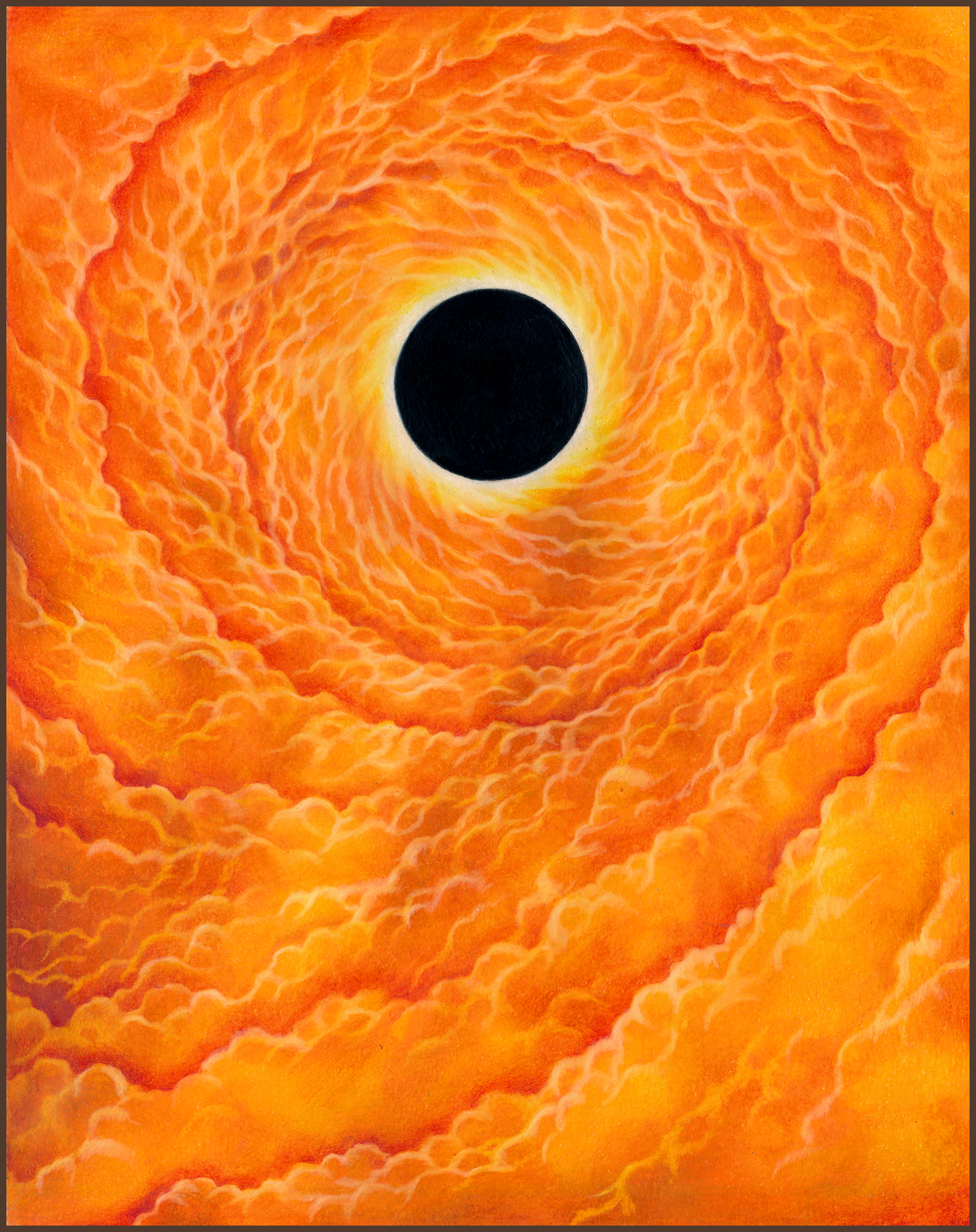
Before even the first age, there was the Urn. This great relic wandered the cosmos, sifting through the remains of lost civilizations, cataloguing and collecting a reliquary of unimaginable size and scope from the vaults of their mournful posterity. Only the dead and dying drew its interest, and none were alive to see its colossal form descend upon the ruins of their world. In fact, it has never been seen by anyone.
At the dawn of Rym’s first age, it brought the broken remnants of six self-extinguished humanoid civilizations to a remote star system and transplanted them to one of its habitable planets – Rym. Why did it do this?
It Was Benevolent: On one hand, the resurrection and rehabilitation of long-dead races could be seen as an act of compassion, and a genuine attempt to help lost civilizations rise from the ashes of history. This could be said of any species the Urn might rebuild. In this case, Rym is more of a sanctuary or a preserve, and the destruction which unfolded within was more of a foolish tragedy, with well-meaning, deific intermediaries made more as role-models than rulers.
It Was Self-Indulgent: On the other hand, the Urn might have just been creating a model world for its own amusement. Perhaps it was simply playing a game, remaking these long-dead civilizations just to toy with them or to have them fight each other. Its deific intermediaries might have been put there to subtly steer them to such ends using all sorts of mythical falsehoods. Maybe the Urn and its false gods were callous oppressors.
Whatever might have motivated this cosmic artifact, Rym was only one of its fabricated and cultivated sanctuaries. Of all its collection, only these six humanoid species could survive on Rym, along with corresponding replications of flora and fauna. It left them with a host of custodians they would come to know as their gods, and then departed for systems unknown, leaving behind a tiny outermost planet of its leftover materials. It hasn’t been back since.
Capabilities: The Urn is an ageless interstellar traveller, an artifact built to collect and replant dead civilizations on new worlds of its own creation. Stellar clusters are its gardens, mostly long-lived K-type stars shrouded by nebulae, far from any external influence beyond its own. It has collected the ruins of countless dead worlds within the demiplane at its core, and is capable of reconstituting their inhabitants, flora, fauna, and other unique constituents from the belt of stardust churning around its interior. It can adjust the orbit of planets and moons in order to adapt them for this purpose, and leaves little trace of its existence aside from incomprehensible polar monoliths used to fine-tune and maintain the planetary climate.
Forces: The Urn constructs two types of wardens to keep everything in order when it leaves. Its greater wardens, or Onai, are left on lunar bodies to watch and prevent interference from outsiders, while its lesser wardens, the Amai, take the form of terrestrial gods to guide the reborn civilizations directly. These beings have god-like powers and are often seen as gods by the inhabitants of their dominion. They are not, however, true gods of a spiritual nature. They're more akin to very, very powerful sorcerors, superheroes, relics, or mythical giants depending on the nature of the cultures they're tasked to guide. Rym's terrestrial Amai are much like those found in classical mythology, while its lunar gods, the Onai, are unrelatable monolithic sculptures placed on the smaller, uninhabitable golden moon, Zunat. They could be thought of as the gods of the Amai themselves, instructing and guilding them through dreams and divination.
|
|

Rym has two moons. The smaller moon, Zunat, is an inhospitable airless desert where the Urn left a circle of immense monuments. These are the Onai, or greater gods, which command higher forces beyond those of their lesser divine creations, the terrestrial gods who live on the planet itself. Zunat is tidally-locked, and during the perigee of its lopsided elliptical orbit, they can actually be seen by anyone with a good telescope. The Onai manipulate time, gravity, atomic structure, and other aspects of Rym’s fundamental mechanics, powers which require absolute detachment and dispassion. They may simply by pieces of the Urn itself, left to ensure that nothing interferes with its garden.
During the First Age, they were the gods of the Amai, or perhaps their creators, imbuing them with their respective powers and responsibilities. They do not communicate directly, but instead impart an overwhelming set of innate motivation within their creations. These are the aspects, spheres, and domains of the Amai, who carry out their will in more understandable or relatable ways, and who took forms that the mortal population would find easier to venerate. There are eight of them, one for each of the Amai, though none are linked one-to-one. Instead, they all share control of their lesser divine subordinates, and transmit the knowledge and power that gives them their divinity.
They Are Sentient: Perhaps they’re aware of what they’re doing, and though alien and unfathomable, their cosmic power is laced with an intelligence that might communicate. These communications are never direct, more like dreams and strange instincts that others might not associate with the silent ring of lunar monoliths. Perhaps you might even open the Sky Door and find a way to survive in the deadly cold vacuum in order to have an audience with them.
They're Incomprehensible: Perhaps they’re just too much for mortal minds, and could only ever communicate with the Amai. They’re more like the machinery of the cosmos, little fragments of the infinite, and any attempt to understand or connect with them would surely lead to madness. In this case, only the Amai could ever interpret their will, or visit them directly to ascertain what they might want. They’re the only ones who know the Urn’s true purpose, after all.
In any case, these are the entities responsible for the Harmonic, which is to say the powers of gods and supernatural beings. This is the blended meddling of their respective forces, the alterations they make on behalf of the Amai and, though them, the mortal population. They lace the world’s matter with the vibration of the Harmonic, locking away wondrous powers in the mundane material of the material world. This power can be unlocked by the Amai, or even mortals who possess some link to them, whether by favor or some facilitated imitation.
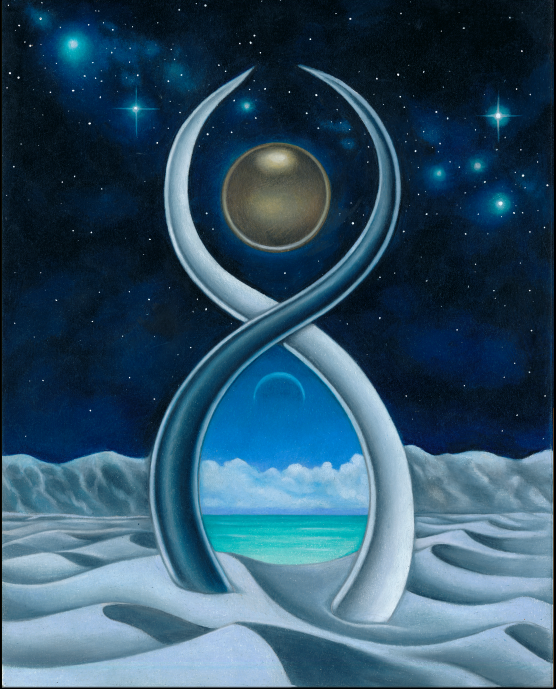
Capabilities: These are Rym’s greater powers that be, the gods of gods. They shape the fabric of space and time, alter reality, and represent the Urn’s true intentions, and while they aren’t made to interfere directly, their creations have no such restriction. This one here is Vitekton, the Onai responsible for the code of every living organism on Rym. If it’s alive, Vitekton vetted it first. The helix suspends an irregular golden orb of primordial ooze which can be sculpted into any organism, and a gateway to Tropos, the great water moon on which its designs were first tested for later transplant. It can emit a tone which restores life or ends it, and is the architect of the Hyphael, the ‘soul’ of Rym’s six original sapient species.
Forces: Vitekton works through Arka and Ceropa, the goddesses of life, fertility, and nature. Though other Amai draw upon its Harmonic, these two are most closely attuned to its wavelength and thus receive its instincts and intentions most directly. Through them, power is shared among the priesthoods of the mortal world, enacting the lesser miracles of healing, regeneration, accelerated growth, and even resurrection. Amai who draw upon Vitekton do not pray to it, they simply attune to its frequency and derive the associated benefits, tendencies, and interpreted intentions of Rym’s collective life force. Others such as Entekton control opposing forces attuned to their own respective Amai.
|
|

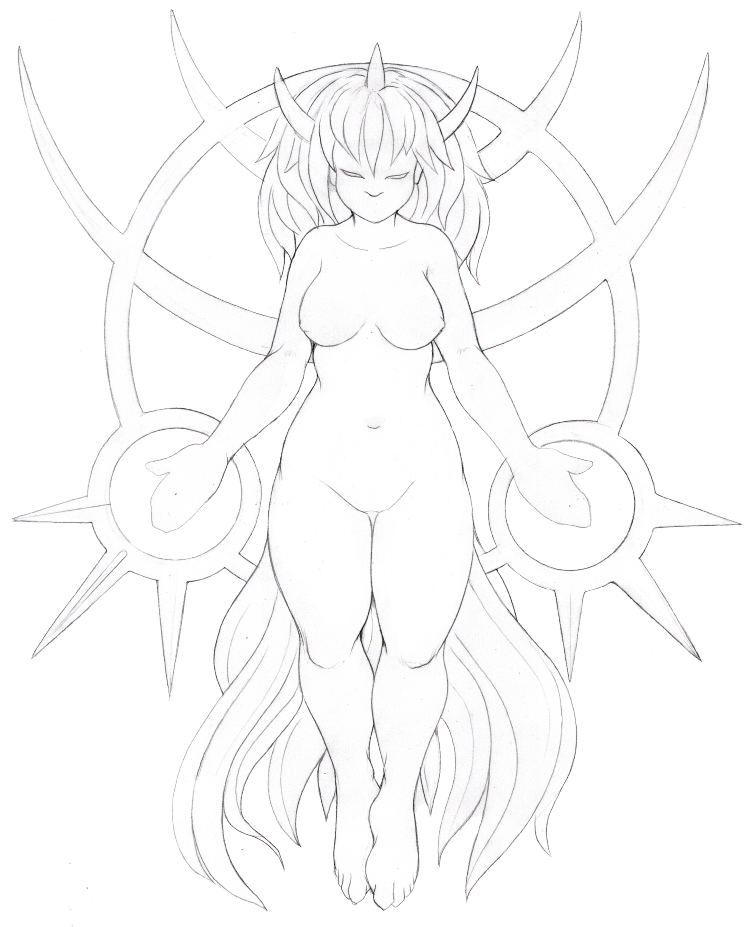
These are the terrestrial gods, those who rule the mortal world. They manifest in physical form, associate with mortal priesthoods, and guide the lives of their followers either directly or indirectly. They aren’t all-powerful, or all-knowing, but they’re easily seen that way. They are immortal, and extraordinary, and they can impart some of this power on those whom they influence. They also have the ability to reincarnate mortal beings in greater or lesser forms, either as a reward or as a punishment. In the First Age, the afterlife is just the next life, and while some might be gifted a heavenly aquatic shape to inhabit the paradise water moon of Tropos, others might end up as a slithering horror of the deep Underworld.
The eight Amai are divided into two sub-pantheons - The Domain of the Sky, and the Domain of the World. Though they aren’t opposed to each other, they represent opposing forces and manifest in ways that could be seen as a balancing conflict. Their temples were a common sight, though many cities and communities had a preference or bias depending on their location, leadership, or resources.
Wardens: For all their power, the Amai are loyal wardens and caretakers, and not your average divine pantheon. Even the god of death and decay is just doing his job, and will remind you of why it’s necessary. These gods are, after all, looking after the Urn’s garden and its constituents. They worked together, held council, and even had relationships from time to time.
Tyrants: But what if power went to their heads, or their rivalries manifested in colder and more violent ways? Their followers might have seen things differently, or their veneration and power-seeking might have prompted them to become more tyrannical or aloof, using the rewards for loyalty or punishment for failure more often, and more whimsically after an age of rule.
Capabilities: These were lesser gods, modeled on pantheons such as the Greek or Egyptian divinity. Though powerful, they could occasionally be tricked or deceived, make mistakes, or succumb to flaws of character. Mortals sought their favor for tangible reasons, as they were known to manifest on some occasions in order to bestow it, or intervene on their behalf. Priests, in particular, would pray for their guidance and assistance, be it through miracles or divination. They couldn’t solve every problem, though they had immense supernatural capabilities and would often take other forms in order to test their followers, rewarding some and punishing others.
Forces: Each of the gods was responsible for some degree of temple worship, and an expansive priesthood. This was how they spread their virtues and their influence, guiding mortal lives indirectly. During the First Age these priesthoods held tremendous amount of power and respect in every flavor, be it adulation or fear, and though there was little open conflict, the competition for followers was very intense. Many such priesthoods commanded templars and militants to defend their interests or manage heresy, and some even held inquisitions to root out those whose views were considered apocryphal.
|